Introduction to USA Baseball
Baseball is one of the most recognized sports in the United States, with a long history, passionate fans, legendary athletes, and competitive leagues at every level. From neighborhood fields and school teams to professional stadiums and international tournaments, the sport has become an important part of American culture. It combines athletic ability, strategy, teamwork, and mental discipline, making every game an exciting contest between pitchers, hitters, and defensive players.
USA baseball also represents the country’s efforts to develop talented athletes and compete against the world’s strongest national teams. Through youth programs, college competitions, professional organizations, and international events, American players gain opportunities to improve their skills and represent their country. Fans follow the sport for its memorable home runs, dramatic strikeouts, close games, and historic rivalries. Whether someone is a beginner learning the rules or an experienced supporter following international competitions, understanding the structure of American baseball provides a deeper appreciation of this popular sport.
History and Development of American Baseball
Baseball developed in the United States during the nineteenth century and gradually became a major spectator sport. Early organized clubs helped establish common rules and competitive traditions, while professional teams created opportunities for players to earn a living through the game. As rail travel, newspapers, and broadcasting expanded, baseball reached larger audiences and became a regular part of American entertainment.
Over time, the sport experienced important changes in equipment, stadiums, player development, and competition formats. Professional baseball expanded its reach, while colleges and amateur organizations created additional pathways for young athletes. The integration of Major League Baseball in 1947, when Jackie Robinson broke the league’s modern color barrier, became a defining moment in sports history. His achievements helped challenge racial discrimination and influenced generations of athletes.
Today, American baseball includes professional leagues, school competitions, youth academies, and national teams. Its traditions remain important, but modern analytics, advanced training methods, and international competition continue to influence how the game is played and understood.
Understanding USA Baseball and Its National Teams
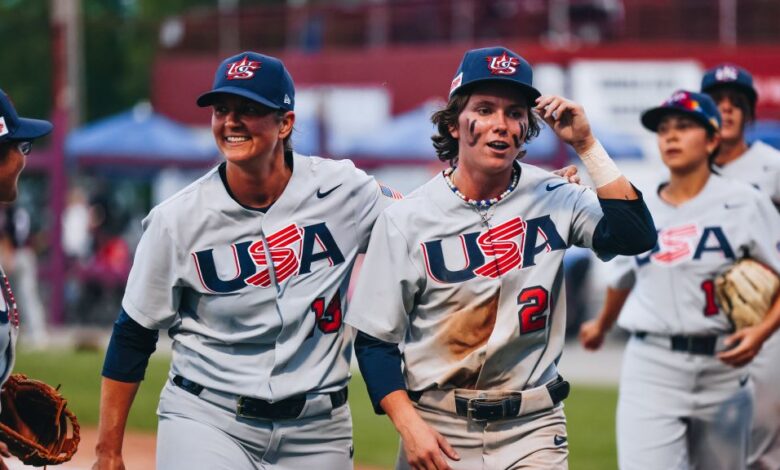
USA Baseball is the national governing body responsible for organizing and supporting many of the country’s amateur and national-team baseball activities. It develops athletes, selects teams for international competitions, and supports coaching and player development initiatives. Its programs cover different age groups, allowing promising players to gain experience before moving into higher levels of competition.
The organization works with athletes, coaches, administrators, and other baseball organizations to strengthen the sport nationwide. National teams may compete in events such as the World Baseball Classic, Premier12, World Baseball Softball Confederation tournaments, and international youth championships, depending on the team category and selection arrangements.
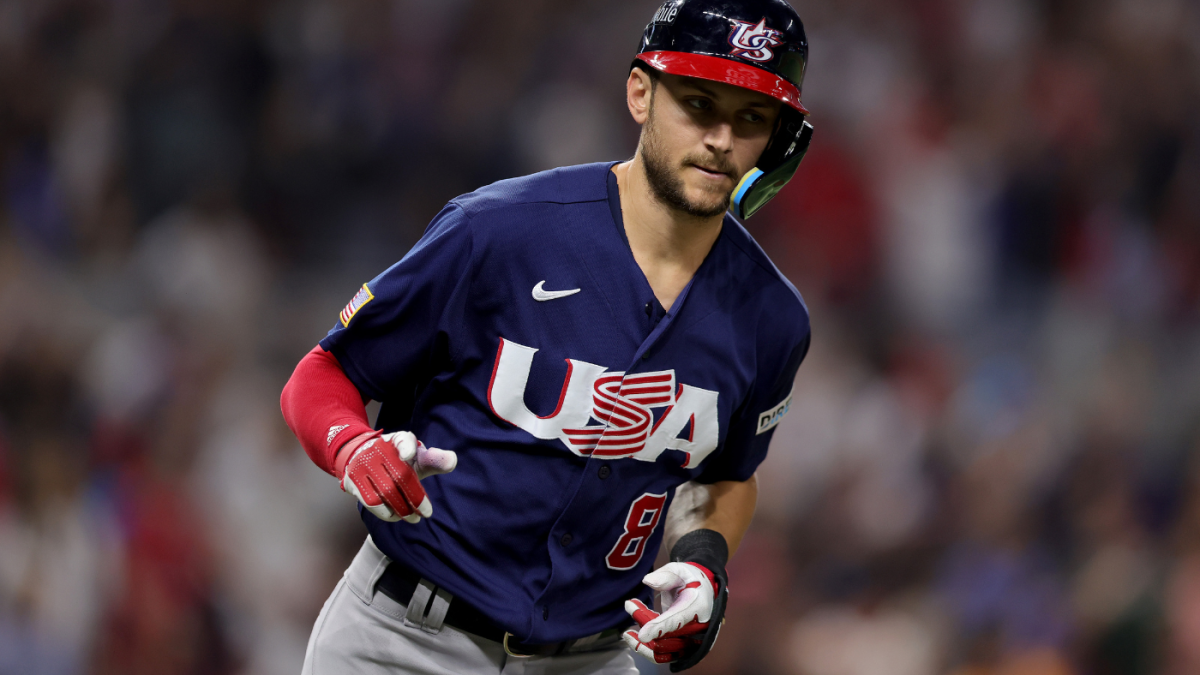
The professional players who represent the United States in major senior international tournaments are not necessarily selected through the same programs as amateur national teams. For example, Major League Baseball players may participate in the World Baseball Classic, while USA Baseball also operates development and amateur teams.
USA baseball therefore covers more than one competition or roster. It represents a broad system of participation, training, national representation, and long-term investment in American baseball talent.
Major Baseball Competitions in the United States
American baseball features several competitions that attract different audiences and serve different purposes. Professional leagues focus on elite club competition, college baseball provides a pathway for developing athletes, and international tournaments allow selected players to represent their country.
Major League Baseball is the country’s leading professional baseball competition. Its regular season includes teams divided between the American League and National League, followed by postseason games that determine the World Series champion. College baseball is another important part of the sport, with the NCAA Division I tournament culminating in the Men’s College World Series.
International competitions provide a different experience because national teams compete rather than professional franchises. The World Baseball Classic is especially significant because it brings together elite players representing their countries. Olympic baseball, when included in the Olympic program, also provides a major international stage.
These competitions serve different audiences and goals. Professional leagues entertain fans throughout a long season, college tournaments showcase emerging talent, and national-team events highlight international pride and competition.
Popular Baseball Competitions at a Glance
| Competition | Main Purpose | Typical Participants |
|---|---|---|
| Major League Baseball | Professional club championship | Professional teams |
| World Baseball Classic | International national-team competition | Selected national teams |
| NCAA College Baseball | College-level competition | University teams |
| Men’s College World Series | Determine the NCAA Division I champion | Qualified college teams |
| Premier12 | International elite competition | Qualified national teams |
| Youth international tournaments | Develop emerging players | Youth national teams |
Each competition has its own qualification rules, schedule, and eligibility requirements. Fans should distinguish between professional club tournaments and international events when following results, player statistics, and championship standings.
The Importance of Major League Baseball
Major League Baseball, commonly known as MLB, is central to the popularity of baseball in the United States. It features 30 franchises divided between the American League and National League, with teams competing through a lengthy regular season before the postseason. The championship concludes with the World Series, where the American League and National League champions compete for the title.
MLB is also an important source of professional talent for international baseball. Players develop their abilities through professional organizations, minor league systems, coaching programs, and specialized training. Their experience can help national teams compete against leading baseball countries.
The league attracts fans through historic rivalries, record-breaking performances, ballpark traditions, and distinctive team identities. Clubs such as the New York Yankees, Los Angeles Dodgers, Boston Red Sox, and Chicago Cubs have built large followings over many generations.
Although MLB and the national team system are separate, their relationship contributes to the wider development of the sport. Professional experience, coaching expertise, and player evaluation can influence the quality of American baseball, particularly during major international competitions.
Key Players and Essential Baseball Positions
Baseball requires players with different physical abilities and specialized responsibilities. A successful team combines pitching strength, defensive awareness, hitting quality, speed, and communication. Each position contributes to the overall strategy, and even small decisions can influence the result of a close game.
The pitcher starts each defensive play by delivering the ball toward home plate. Catchers receive pitches, guide defensive communication, and help control the running game. Infielders defend the area around the bases, while outfielders cover deeper parts of the field and prevent extra-base hits. Offensive players attempt to reach base, advance teammates, and score runs.
Professional and national-team selections consider several factors, including performance, health, experience, role requirements, and the competition format. A roster may need power hitters, reliable starting pitchers, relief specialists, defensive replacements, and fast baserunners.
Important skills for baseball players include:
-
Batting: Making solid contact and selecting suitable pitches.
-
Pitching: Controlling velocity, movement, location, and pitch selection.
-
Fielding: Catching, throwing, positioning, and reacting quickly.
-
Base running: Reading defensive situations and advancing safely.
-
Teamwork: Communicating effectively and making decisions under pressure.
-
Mental focus: Maintaining confidence and concentration throughout a game.
These skills develop through consistent practice, competition, coaching, and physical conditioning.
Basic Rules of Baseball
Baseball is played between two teams, with one team batting and the other defending at a time. The batting team attempts to score runs by sending runners around four bases and returning them safely to home plate. The defensive team tries to record outs and prevent the opposition from scoring.
A standard professional game consists of nine innings. Each inning has a top half and a bottom half, and each team generally receives an opportunity to bat. A half-inning ends after the defensive team records three outs. If the score is tied after nine innings, extra innings are played under the applicable competition rules.
Batters can reach base through hits, walks, errors, and other situations defined by the rules. A home run allows the batter and any eligible runners already on base to score, provided the play meets the rules for a home run. Pitchers aim to retire batters through strikeouts, ground balls, fly balls, and other defensive plays.
Understanding these fundamentals helps new fans follow the game more confidently. Baseball is particularly interesting because teams must constantly balance aggression and caution. A manager may change pitchers, adjust defensive positioning, or substitute a player depending on the score, inning, and opposing lineup.
How Young Players Develop in American Baseball
Youth development is an important part of the country’s baseball system. Children often begin by playing recreational baseball, where they learn the basic rules, develop coordination, and experience teamwork. As their skills improve, they may join school teams, travel teams, local clubs, or specialized development programs.
High school baseball provides another stage for competitive growth. Players learn more advanced techniques, face stronger opponents, and gain opportunities to attract attention from college recruiters. College baseball can offer a combination of education, structured coaching, athletic competition, and preparation for professional opportunities.
Some talented athletes enter professional baseball through the MLB Draft or other eligible signing routes. Others continue developing in amateur leagues or pursue careers outside professional sports. There is no single pathway that suits every player, so access to quality coaching, academic support, and appropriate competition is important.
Effective player development should emphasize sound technique, physical conditioning, injury prevention, sportsmanship, and enjoyment. Young athletes benefit from learning how to handle mistakes as well as successes. These foundations help build stronger players and support the long-term health of the sport.
Technology and Modern Baseball Training
Technology has changed how baseball players train, prepare, and evaluate their performances. Coaches increasingly use video analysis, pitch-tracking systems, motion measurements, and statistical models to identify strengths and weaknesses. These tools can help pitchers improve command, hitters refine their swings, and fielders make better positioning decisions.
Data analysis is also important at the professional level. Teams evaluate metrics such as batting average, on-base percentage, slugging percentage, earned run average, strikeout rate, and defensive performance. More advanced measurements can assess the speed and angle of a batted ball, pitch movement, and a player’s contribution beyond traditional statistics.
However, technology cannot replace sound coaching or the experience gained through competition. Players still need to understand game situations, communicate with teammates, and make quick decisions under pressure. Data is most useful when it supports practical training goals rather than distracting athletes from the fundamentals.
Modern baseball also benefits from improved strength programs, nutrition planning, recovery routines, and workload management. These methods can support performance and reduce certain injury risks when applied appropriately. As training continues to evolve, American baseball will likely combine traditional knowledge with increasingly sophisticated performance analysis.
Why International Baseball Matters
International competition gives American players an opportunity to test their abilities against different styles of baseball. Countries such as Japan, the Dominican Republic, Venezuela, South Korea, Mexico, and Cuba have strong baseball traditions, although their participation and eligibility vary by tournament.
These events often feature intense games because national pride adds another dimension to the competition. Players who normally compete against one another in professional leagues may become teammates when representing the same country. Fans also experience different playing styles, coaching strategies, and approaches to player development.
The World Baseball Classic is a prominent example of this international environment. Its national-team format brings together professional stars and other selected players, creating matchups that may not occur during a standard MLB season. Tournament results can also influence public interest in baseball beyond traditional strongholds.
International competition benefits the sport by creating opportunities for cultural exchange, expanding its audience, and encouraging countries to invest in coaching and youth development. For American players, these tournaments offer a chance to represent their country while competing at a high level.
Challenges Facing American Baseball
Despite its popularity, baseball faces several challenges. Participation costs can be high for families who need to pay for equipment, travel, coaching, and tournament fees. Unequal access to facilities and organized programs may limit opportunities for talented children in some communities.
The sport also competes with other activities for young people’s time and attention. Shorter attention spans, busy schedules, and changing entertainment habits can make it harder for some leagues to retain participants. Organizations must find ways to keep baseball accessible, welcoming, and enjoyable.
Player health is another important concern. Pitchers and position players can experience injuries from repetitive movements, overuse, and intense competition. Appropriate workload management, recovery, strength training, and professional medical guidance are essential components of responsible development.
Baseball organizations can address these issues through affordable programs, community partnerships, inclusive coaching, better facilities, and age-appropriate competition. Promoting the sport requires more than producing elite professional athletes. It also means creating positive experiences for children, recreational players, volunteers, coaches, and fans.
The Future of USA Baseball
The future of American baseball will depend on continued investment in player development, community participation, technology, and international competition. Professional teams are likely to keep refining performance analysis, while amateur organizations will continue searching for effective ways to identify and support promising athletes.
Youth access will remain especially important. Affordable equipment, local coaching, safe playing environments, and well-organized leagues can encourage more children to try the game. Schools and community programs can introduce baseball to people who might otherwise lack access to organized sports.
International events may also help expand interest among younger audiences. Digital coverage, streaming platforms, social media, and short-form highlights allow fans to follow teams and players in new ways. At the same time, the atmosphere of a live game, the traditions of the ballpark, and the drama of a close contest remain central to baseball’s appeal.
The long-term strength of USA baseball will depend on balancing elite performance with broad participation. By supporting players at every level and welcoming new generations of fans, the sport can preserve its traditions while adapting to changing expectations.
Conclusion
USA baseball brings together a rich sporting history, professional competition, amateur development, and international ambition. From youth leagues and college tournaments to Major League Baseball and national-team events, the sport provides opportunities for athletes and entertainment for millions of fans. Its combination of skill, strategy, teamwork, and tradition makes it distinctive within American sports culture.
Understanding the major competitions, player positions, rules, and development pathways helps fans appreciate the game beyond its biggest moments. The sport still faces challenges involving accessibility, participation costs, and player health, but continued investment and responsible development can support its growth.
Ultimately, American baseball is more than a professional league or a national team. It is a broad sporting community built around competition, learning, and shared experiences. Its future will depend on preserving what makes the game special while creating opportunities for the next generation of players and supporters.