The India vs Netherlands cricket contest brings together two teams with different cricketing histories, resources, and levels of international experience. India is one of the most successful teams in world cricket, with a strong record across Test matches, One Day Internationals (ODIs), and Twenty20 Internationals (T20Is). The Netherlands, meanwhile, has developed a competitive reputation through disciplined performances, talented players, and memorable results against established cricketing nations. When these teams meet, the contest offers an interesting combination of experience, ambition, and tactical challenges.
For Indian supporters, a match against the Netherlands is an opportunity to watch established stars, emerging talent, and different combinations within the squad. For Dutch cricket, playing against India provides valuable international exposure and a chance to demonstrate how far the team has progressed. Although India may often enter such fixtures as the favourite, cricket remains unpredictable. A strong bowling spell, an important partnership, or a sudden change in momentum can influence the result. Understanding the teams, playing conditions, recent performances, and match strategies helps fans appreciate the contest beyond the final score.
India vs Netherlands: An Overview of the Cricket Contest
India has a deep cricketing structure supported by domestic competitions, international tours, professional leagues, and a large pool of experienced players. This system allows the team to select specialists for different conditions and formats. Indian batters are often known for their technical ability and attacking options, while the bowling unit can combine pace, swing, seam movement, and spin. The team can therefore adapt its approach according to the pitch, opposition, and match situation.
The Netherlands has followed a different development path, building its international presence through European competitions, qualifying tournaments, and appearances at major global events. Its players often combine international experience with professional or domestic cricket opportunities in different countries. This exposure has helped the team develop flexible batting line-ups and disciplined bowling plans. In an India versus Netherlands fixture, the Dutch side can benefit from maintaining pressure, limiting unnecessary mistakes, and taking advantage of important moments rather than attempting to match India’s resources player for player.
The contrast between the teams makes the fixture appealing to a wide audience. India may have greater depth and more players accustomed to high-pressure international matches, but the Netherlands can still create problems through smart field placements, accurate bowling, and aggressive batting when opportunities arise.
Head-to-Head Record and Previous Matches
The history of this fixture shows India’s strong record against the Netherlands in major international competitions. Their men’s teams have met in both ODI and T20I cricket, including World Cup tournaments. These matches have provided opportunities for India to test different combinations while allowing the Netherlands to compete against a leading international side. Head-to-head statistics offer useful context, although past results do not guarantee the outcome of a future match.
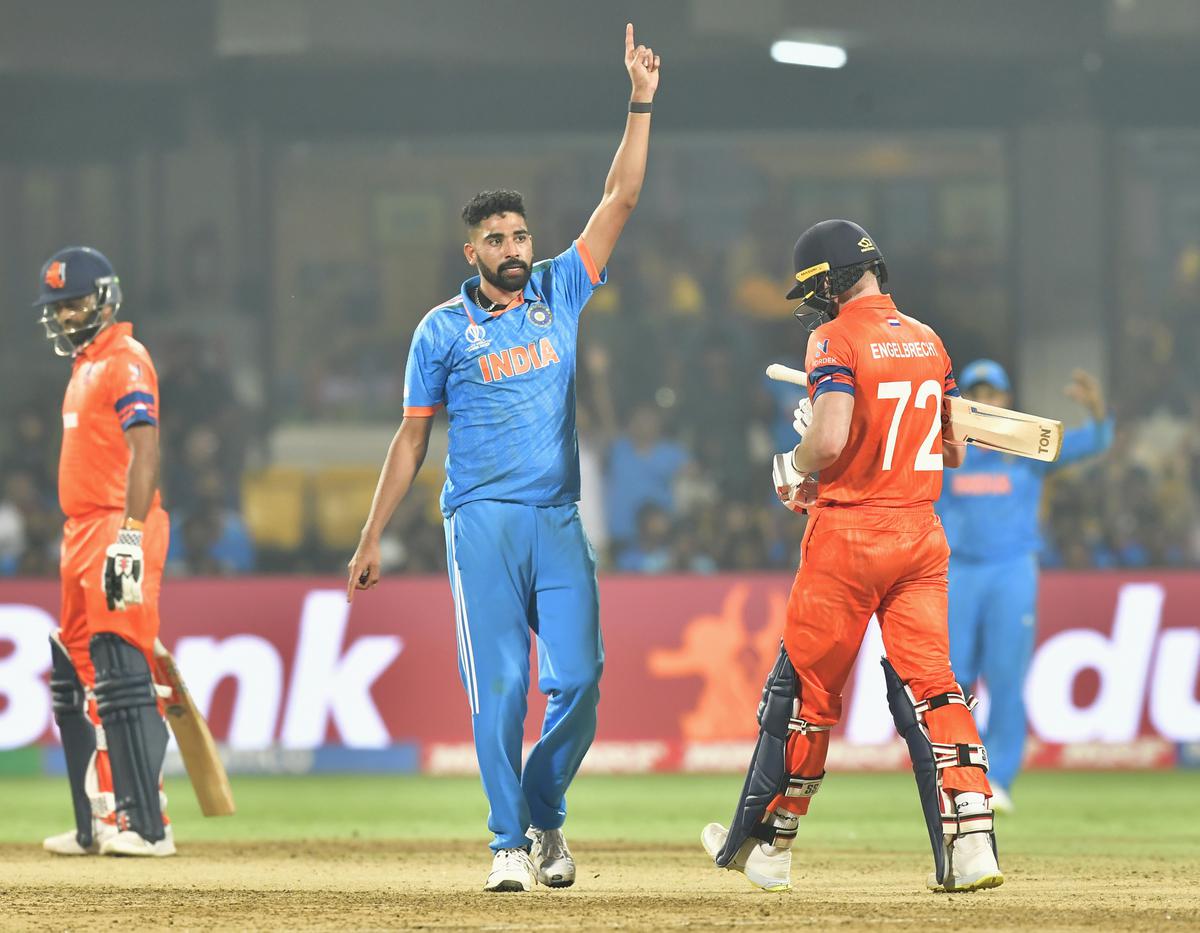
One memorable encounter took place during the 2023 ICC Men’s Cricket World Cup in Bengaluru. India scored 410 for four in 50 overs, with centuries from Shreyas Iyer and KL Rahul. The Netherlands were dismissed for 250, giving India a convincing 160-run victory. The match demonstrated India’s batting depth and ability to accelerate during the closing overs. It also showed that the Dutch team could produce promising periods with the bat despite facing a formidable target.
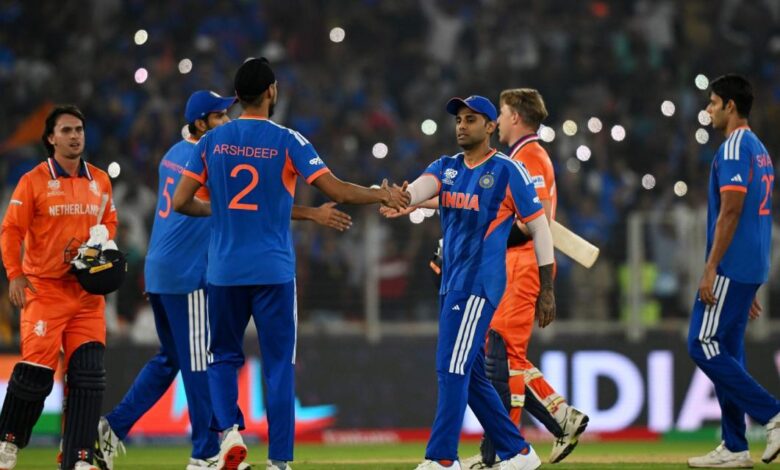
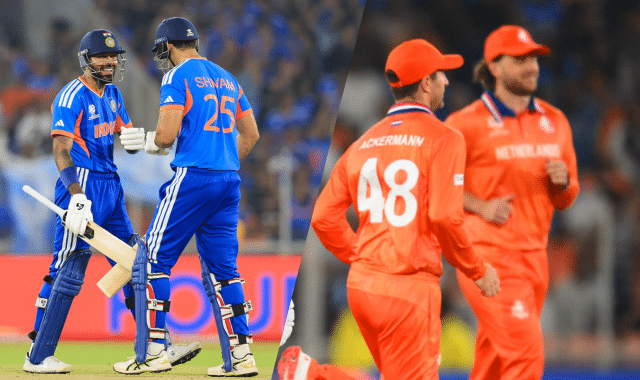
The teams met again in the 2026 ICC Men’s T20 World Cup in Ahmedabad. India scored 193 for six, powered by Shivam Dube’s explosive 66 from 31 deliveries. The Netherlands responded with 176 for seven, keeping the contest competitive until the final overs. India eventually won by 17 runs, highlighting the Dutch team’s ability to challenge a strong opponent in the shorter format.
Important Head-to-Head Matches
|
Tournament or year |
Format |
Result |
Key takeaway |
|---|---|---|---|
|
2003 Cricket World Cup |
ODI |
India won by 68 runs |
India’s early World Cup success |
|
2011 Cricket World Cup |
ODI |
India won by 5 wickets |
A successful chase |
|
2022 T20 World Cup |
T20I |
India won by 56 runs |
Strong all-round performance |
|
2023 Cricket World Cup |
ODI |
India won by 160 runs |
Exceptional batting display |
|
2026 T20 World Cup |
T20I |
India won by 17 runs |
Netherlands remained competitive |
The table highlights selected men’s international matches, not a complete record of every fixture.
Key Indian Players to Watch
India’s batting strength often makes the team dangerous in limited-overs cricket. Experienced batters can build an innings patiently before increasing the scoring rate, while aggressive openers can put pressure on the opposition during the powerplay. Middle-order players provide stability when early wickets fall and help the team finish strongly. The combination of technique, shot selection, and power hitting allows India to respond to different bowling plans.
In the 2026 T20 World Cup meeting, Shivam Dube was particularly influential with his 66-run innings. His ability to clear the boundary made a substantial difference to India’s total. Suryakumar Yadav and Hardik Pandya also contributed to the innings, demonstrating the value of a middle order that can maintain momentum. Such performances illustrate why India can remain competitive even when individual batters struggle to establish themselves.
India’s bowlers are equally important. Fast bowlers can exploit movement with the new ball, while spinners can control the middle overs and force batters to take risks. Death-over specialists focus on yorkers, slower deliveries, and variations that make clean hitting difficult. The effectiveness of this combination often determines whether India can defend a challenging total or restrict an opponent to a manageable score.
Key Netherlands Players to Watch
The Netherlands relies on a balanced group of technically sound batters, versatile all-rounders, and bowlers capable of executing specific plans. Players such as Scott Edwards, Bas de Leede, and Logan van Beek have featured in important international contests for the Dutch side. Their contributions can be particularly significant against stronger teams, where a disciplined performance across all departments is essential.
Scott Edwards offers leadership and wicketkeeping skills, while Bas de Leede provides flexibility through his batting and bowling. Logan van Beek can contribute with both disciplines and has experience in pressure situations. Depending on the selected squad, players such as Max O’Dowd and Colin Ackermann can also be important in constructing an innings or stabilising the batting order. Selection and current form should always be checked before assessing a specific match.
For the Netherlands, success against India depends on collective execution rather than relying on one star. The top order must avoid losing several wickets early, the middle order needs to rotate the strike, and the lower order must make the most of the final overs. With the ball, disciplined lines and changes of pace can help restrict scoring opportunities.
Batting Strategies and Expected Match Approach
Batting strategy changes considerably between ODIs and T20Is. In a T20 match, teams have only 20 overs to create a competitive total, so scoring opportunities must be used efficiently. Openers may attack during the powerplay, but reckless shots can quickly undermine the innings. A successful team balances boundary hitting with singles and twos, ensuring that the scoreboard continues to move even when bowlers restrict big shots.
In ODIs, the batting side has more time to recover from setbacks. Teams can rebuild after early wickets, establish partnerships, and accelerate later. The 2023 World Cup meeting demonstrated how India used partnerships and a strong finish to reach 410 for four. For the Netherlands, the challenge in a similar situation would be to take wickets at regular intervals and prevent the opposition from building a large total.
A practical batting plan includes these priorities:
-
Preserve wickets during difficult periods without allowing the run rate to stall.
-
Identify scoring options against each bowler.
-
Rotate the strike to reduce pressure during dot-ball sequences.
-
Target weaker match-ups when the fielding restrictions create opportunities.
-
Keep enough power hitters available for the closing overs.
These principles are relevant to both sides, although the exact approach depends on the pitch, weather, target, and available players.
Bowling Plans and Fielding Performance
Bowling can decide a close match even when one team appears stronger on paper. India’s bowling attack typically offers a mixture of pace, swing, spin, and changes of speed. The captain can use fast bowlers to attack early, introduce spinners when the pitch offers grip, and reserve specialist options for the final overs. The goal is to take wickets while preventing the batting side from developing a comfortable rhythm.
The Netherlands can compete by concentrating on accuracy and variation. Rather than trying to bowl faster on every delivery, its bowlers can change their lengths, use slower balls, and make batters hit towards longer boundaries. Early wickets are especially valuable because they can force India’s middle order to rebuild instead of attacking freely. Strong fielding, quick movement, and safe catching are also essential because even a small number of missed opportunities can change a limited-overs contest.
For both teams, fielding is more than a supporting activity. Saving boundaries, completing run-outs, and maintaining pressure between deliveries can influence the final margin. When the batting sides are separated by only a few runs, one excellent catch or a missed stop can become a defining moment.
Pitch Conditions and Weather Factors
Pitch conditions have a significant influence on how a match develops. A hard, even surface can help batters play attacking strokes, while a slower pitch may reward bowlers who vary their pace and spinners who maintain accurate lines. The condition of the outfield also affects how quickly the ball reaches the boundary. Before a match, teams consider these factors when deciding their batting order and bowling combinations.
Weather conditions can influence the contest as well. Cloud cover may help seam bowlers under suitable conditions, while dew during an evening match can make it harder for bowlers to grip the ball. A wet outfield can affect fielding and change the effectiveness of spin. These factors are not guaranteed to determine the result, but they can influence the toss decision and the choice between batting first and chasing.
Fans following India vs Netherlands should look beyond the venue’s reputation and consider the actual conditions on match day. A high-scoring ground may encourage aggressive batting, whereas a surface offering movement or inconsistent bounce may favour a more cautious approach. The toss, confirmed playing XIs, and recent performances can provide useful clues, but the match itself remains the ultimate test.
ODI Cricket Compared with T20 International Matches
The two formats demand different skills and create different kinds of pressure. ODI cricket rewards the ability to build long innings, manage partnerships, and maintain a scoring rate across 50 overs. Teams need enough batting depth to recover from setbacks and enough bowling variety to control different phases. A successful ODI performance usually involves sustained discipline rather than relying entirely on a short burst of scoring.
T20 cricket places greater emphasis on rapid decisions, inventive shot-making, and precise bowling at the death. Batters must find scoring options quickly, while bowlers have little time to recover from an expensive over. A total that looks competitive can become vulnerable if the opposition has wickets in hand and powerful finishers at the crease.
The Netherlands has opportunities to challenge India in either format, but the requirements differ. In an ODI, the Dutch team can focus on building partnerships and creating pressure over a longer period. In a T20I, it may need a particularly effective powerplay and an outstanding finish to compete with India’s batting depth. India, in turn, must avoid underestimating the opposition and maintain concentration throughout the game.
What Makes This Match Interesting for Cricket Fans?
This fixture appeals to fans because it combines established international quality with the determination of a developing cricket nation. Indian supporters often look for strong performances from their favourite players, exciting batting, and evidence that the team can adapt its strategy. Dutch supporters have the opportunity to watch their side compete against one of the sport’s biggest teams and measure its progress against a demanding standard.
The contest can also reveal emerging talent. International matches against experienced opponents test a player’s temperament, decision-making, and technical skills. A promising innings or an economical bowling spell may build confidence for future tournaments. These performances matter even when the result favours the stronger team.
For viewers, useful details to follow include:
-
The opening partnership and powerplay run rate.
-
Wickets taken during the middle overs.
-
The number of runs scored in the final overs.
-
Bowling economy rates and boundary frequency.
-
Dropped catches, run-outs, and other fielding moments.
-
The way captains adjust their plans when momentum changes.
Together, these details provide a more complete understanding of the game than the final score alone.
How to Follow Match Results and Statistics
Fans following India vs Netherlands can use official tournament scorecards and cricket governing-body updates to check results, player statistics, and confirmed squads. A scorecard typically includes runs, balls faced, boundaries, wickets, overs, bowling figures, extras, and the final result. These numbers help explain how a match was won and which players had the greatest influence.
Before reading a preview, check whether it refers to an ODI, T20I, or another competition. Head-to-head records may vary depending on whether they include men’s and women’s cricket, different formats, or only selected tournaments. Recent results should also be distinguished from historical statistics. This prevents confusion when comparing teams or evaluating a player’s current form.
It is useful to examine several measures together rather than relying on one statistic. A batter’s total runs, for example, become more meaningful when considered alongside strike rate, opposition quality, and match conditions. Similarly, a bowler’s wicket tally should be evaluated alongside economy rate and the stage of the innings in which those wickets were taken.
Conclusion
The India versus Netherlands cricket contest highlights the contrast between a leading international side and a team continuing to strengthen its presence in world cricket. India’s batting depth, varied bowling attack, and experience often make it the favourite, while the Netherlands can remain competitive through disciplined execution, strong partnerships, and effective fielding.
The 2023 ODI World Cup meeting demonstrated India’s ability to produce a huge total, while the 2026 T20 World Cup match showed that the Netherlands could make a close contest of a demanding chase.
These encounters underline the importance of adapting to the format, using conditions wisely, and maintaining pressure across every phase of play.
For cricket fans, understanding the players, tactics, pitch conditions, and historical results makes each meeting more engaging. Although past records provide useful context, every new match creates a fresh opportunity for outstanding performances and unexpected moments. That combination of experience, ambition, and uncertainty is what makes international cricket enjoyable to follow.