International cricket between India and South Africa has consistently delivered exciting contests, memorable performances and challenging moments for both teams. These sides are known for their competitive batting line-ups, quality fast bowlers, experienced all-rounders and ability to perform under pressure. Whether they meet in a Test series, One Day International (ODI) or T20 International, their matches attract considerable attention from cricket followers.
The india national cricket team vs south africa national cricket team match scorecard provides a detailed picture of how a match develops from the opening innings to the final result. It helps readers understand individual batting contributions, bowling performances, partnerships, wickets, extras and the overall team totals. Instead of focusing only on the winning team, a complete scorecard explains the important contributions that influenced the outcome.
As of November 2026, one of the latest major meetings between these teams took place during the ICC Men’s T20 World Cup on 22 February 2026 at Narendra Modi Stadium in Ahmedabad. South Africa scored 187/7 in 20 overs, while India were dismissed for 111 in 18.5 overs. South Africa secured an important 76-run victory, with David Miller earning Player of the Match recognition for his 63 off 35 deliveries.
India National Cricket Team vs South Africa National Cricket Team Match Scorecard: Latest Match
The February 2026 T20 World Cup encounter was an important contest because both teams entered the tournament with strong expectations. South Africa won the toss and decided to bat first, aiming to establish a competitive total on the Ahmedabad surface. Although the Indian bowling attack managed to take wickets during the innings, South Africa maintained a positive scoring approach and finished with 187 runs for seven wickets.
India faced a challenging target of 188 runs. However, the South African bowling unit applied pressure through disciplined lines, effective variations and regular breakthroughs. India’s batting order could not establish the partnerships needed to maintain the required scoring rate. The innings ended at 111 runs in 18.5 overs, giving South Africa a convincing victory.
Complete Match Summary
ICC Men’s T20 World Cup 2026 · Super 8 · 22 February 2026
| Match information | Details |
|---|---|
| Teams | India vs South Africa |
| Venue | Narendra Modi Stadium, Ahmedabad |
| Format | T20 International |
| Toss winner | South Africa |
| South Africa innings | 187/7 (20 overs) |
| India innings | 111 all out (18.5 overs) |
| Match result | South Africa won by 76 runs |
| Player of the Match | David Miller (63 off 35 balls) |
South Africa Batting Performance
South Africa’s innings did not begin as smoothly as the team would have wanted. The Indian fast bowlers found early success and put pressure on the opposition batting order. Aiden Markram scored four runs, Quinton de Kock contributed six, and Ryan Rickelton managed seven before losing their wickets. South Africa were reduced to 20/3, creating an opportunity for India to control the match during the powerplay and middle overs.
However, Dewald Brevis and David Miller changed the direction of the innings with an important partnership. Brevis scored 45 runs from 29 deliveries, including three fours and three sixes. Miller played an even more influential innings, making 63 from 35 balls with seven boundaries and three sixes. Their partnership added 97 runs from 50 deliveries, allowing South Africa to recover from the early setbacks. Tristan Stubbs continued the attacking approach towards the end, remaining unbeaten on 44 from 24 balls. His contribution helped South Africa reach 187/7, a total that eventually proved more than enough.
South Africa Batting Scorecard
| Batter | Runs | Balls |
|---|---|---|
| Aiden Markram | 4 | 7 |
| Quinton de Kock | 6 | 7 |
| Ryan Rickelton | 7 | 7 |
| Dewald Brevis | 45 | 29 |
| David Miller | 63 | 35 |
| Tristan Stubbs | 44* | 24 |
| Marco Jansen | 2 | 6 |
| Corbin Bosch | 5 | 6 |
| Kagiso Rabada | 0* | 1 |
| Extras | 11 | — |
| Total | 187/7 | 20 overs |
The scorecard highlights the importance of middle-order partnerships in T20 cricket. South Africa lost three early wickets, but the middle-order batters refused to surrender control. Miller’s experience and Brevis’s attacking approach gave the innings momentum, while Stubbs ensured that the final overs produced valuable runs. These contributions explain why the South African total became difficult for India to chase.
India Bowling Performance Against South Africa
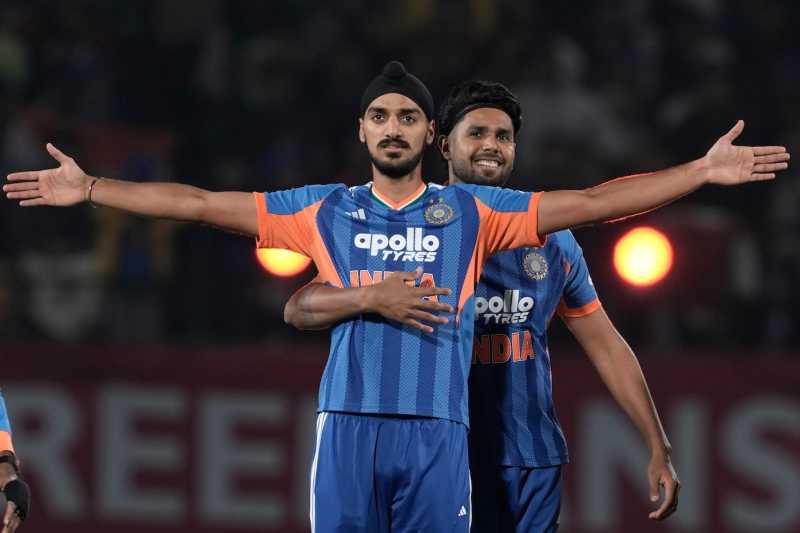
India’s bowling performance included some impressive individual efforts, particularly from Jasprit Bumrah. He delivered an economical spell and picked up three important wickets, conceding just 15 runs in four overs. Arshdeep Singh also contributed two wickets for 28 runs. These performances demonstrated that India’s pace attack could create difficulties for South Africa, especially during the opening overs.
Varun Chakaravarthy took one wicket but conceded 47 runs in his four overs. Hardik Pandya gave away 45 runs without taking a wicket, while Shivam Dube picked up one wicket in two overs. Washington Sundar could not take a wicket during his two-over spell. Although India initially restricted South Africa through early breakthroughs, the middle overs became expensive. The inability to control Miller, Brevis and Stubbs allowed South Africa to finish with a competitive total.
Important Indian Bowling Figures
-
Jasprit Bumrah: 3 wickets for 15 runs in 4 overs.
-
Arshdeep Singh: 2 wickets for 28 runs in 4 overs.
-
Shivam Dube: 1 wicket for 32 runs in 2 overs.
-
Varun Chakaravarthy: 1 wicket for 47 runs in 4 overs.
The bowling figures show that India’s attack had moments of success but struggled to maintain consistent control throughout the innings. Bumrah was particularly effective, but the team needed stronger support from the other bowlers during the middle and death overs.
India Batting Performance and Run Chase
Chasing 188 runs required India to maintain a healthy scoring rate while protecting their wickets. Unfortunately, the Indian batting innings began with immediate difficulties. Ishan Kishan was dismissed without scoring, while Tilak Varma managed only one run. Abhishek Sharma contributed 15 runs from 12 balls, but his dismissal left India under pressure during the powerplay. Losing three wickets early in a T20 chase makes it difficult for the remaining batters to balance aggression with stability.
Captain Suryakumar Yadav scored 18 runs from 22 deliveries, while Washington Sundar added 11 runs. Hardik Pandya also managed 18 runs, but India continued losing wickets at regular intervals. Shivam Dube was the leading Indian batter with 42 runs from 37 balls, including one four and three sixes. His innings helped India avoid an even smaller total, but the required run rate had already become difficult to manage. India eventually lost all ten wickets for 111 runs in 18.5 overs.
India Batting Scorecard
| Batter | Runs | Balls |
|---|---|---|
| Ishan Kishan | 0 | 4 |
| Abhishek Sharma | 15 | 12 |
| Tilak Varma | 1 | 2 |
| Suryakumar Yadav | 18 | 22 |
| Washington Sundar | 11 | 11 |
| Shivam Dube | 42 | 37 |
| Hardik Pandya | 18 | 17 |
| Rinku Singh | 0 | 2 |
| Arshdeep Singh | 1 | 2 |
| Varun Chakaravarthy | 0* | 3 |
| Jasprit Bumrah | 0 | 1 |
| Extras | 5 | — |
| Total | 111 all out | 18.5 overs |
The india national cricket team vs south africa national cricket team match scorecard clearly shows the difference between the two teams’ batting performances. South Africa recovered from an early collapse through strong partnerships, whereas India could not build a similar foundation during the chase. Dube’s contribution was valuable, but one individual performance was insufficient to overcome the combined strength of the South African bowling attack.
South Africa Bowling Performance
South Africa’s bowlers played a major role in securing the victory. Marco Jansen was among the most successful performers, claiming four wickets for 22 runs in 3.5 overs. His ability to change pace and use variations made it difficult for Indian batters to settle. Keshav Maharaj also produced an important spell, taking three wickets for 24 runs in three overs. His breakthroughs during the middle overs significantly weakened India’s chances of recovering.
Corbin Bosch supported the attack by taking two wickets for just 12 runs in three overs. Aiden Markram also contributed one wicket, while Lungi Ngidi bowled four economical overs and conceded only 15 runs. Kagiso Rabada completed his spell without taking a wicket, but the overall bowling performance was highly effective. South Africa combined accurate bowling, disciplined fielding and intelligent changes of pace to prevent India from developing partnerships.
South Africa Bowling Figures
| Bowler | Overs | Runs | Wickets |
|---|---|---|---|
| Aiden Markram | 1 | 5 | 1 |
| Marco Jansen | 3.5 | 22 | 4 |
| Kagiso Rabada | 4 | 32 | 0 |
| Lungi Ngidi | 4 | 15 | 0 |
| Keshav Maharaj | 3 | 24 | 3 |
| Corbin Bosch | 3 | 12 | 2 |
The bowling figures demonstrate how South Africa distributed responsibility across the attack. Jansen and Maharaj created the most significant breakthroughs, while Ngidi maintained pressure through economical bowling. Bosch also made an important contribution by taking wickets without allowing India to score freely.
Key Moments That Decided the Match
Several important moments shaped the outcome of this T20 World Cup encounter. The first major turning point was South Africa’s early collapse. India had taken three wickets for just 20 runs, and the match appeared to be moving in the home team’s favour. However, the partnership between Brevis and Miller completely changed the situation. Their ability to rotate the strike and find boundaries prevented India from maintaining its early advantage.
The second major moment was Tristan Stubbs’s late contribution. His unbeaten 44 helped South Africa move towards a total of 188, giving the bowlers a strong target to defend. India’s poor start during the chase then made the task considerably harder. The quick dismissals in the opening overs meant that the middle order had to rebuild rather than attack freely. Maharaj’s three-wicket spell and Jansen’s four breakthroughs eventually ended India’s hopes of a successful chase.
Player of the Match: David Miller
David Miller received the Player of the Match award for his outstanding contribution with the bat. His 63-run innings from just 35 deliveries was one of the most important performances of the contest. At a time when South Africa had lost three early wickets, Miller showed composure and confidence. Rather than allowing the Indian bowlers to dominate, he selected scoring opportunities carefully and attacked deliveries that allowed him to play his preferred shots.

His partnership with Dewald Brevis provided South Africa with the stability needed to rebuild the innings. Miller’s ability to find boundaries while rotating the strike made the partnership particularly effective. His performance also demonstrated the importance of experienced middle-order players in pressure situations. The india national cricket team vs south africa national cricket team match scorecard reflects how his innings helped transform a difficult situation into a winning position for South Africa.
Head-to-Head Record Between India and South Africa
India and South Africa have developed a competitive international cricket rivalry across all three major formats. Their encounters have produced exciting finishes, outstanding individual performances and several memorable tournament matches. India have traditionally been strong at home, while South Africa have demonstrated their ability to compete effectively in overseas conditions. The teams have also experienced changes in playing combinations, leadership and strategies over the years.
In T20 cricket, both sides possess powerful batters and versatile bowling attacks. India’s batting depth and spin options provide considerable flexibility, while South Africa have traditionally relied on aggressive batting, quality fast bowling and athletic fielding. Their recent meetings have demonstrated that neither team can be considered an easy opponent. The result of one match does not necessarily determine the outcome of the next because conditions, team combinations and individual form can change significantly.
Why the Match Scorecard Matters to Cricket Fans
A cricket scorecard is more than a simple record of runs and wickets. It provides detailed information that helps supporters understand how individual players contribute to the team’s overall performance. For example, a batter scoring 30 runs from 15 balls may have a different impact from someone scoring 30 runs from 35 balls. Similarly, a bowler taking two wickets while conceding very few runs can influence a match differently from a bowler taking two wickets at a much higher economy rate.
Readers following the india national cricket team vs south africa national cricket team match scorecard can use several statistics to understand the match more effectively:
-
Batting average: Helps evaluate a batter’s consistency across multiple matches.
-
Strike rate: Shows how quickly a batter scores runs.
-
Bowling economy: Measures the average number of runs conceded per over.
-
Partnerships: Explain how two batters contribute towards building an innings.
Understanding these statistics makes cricket analysis more interesting and helps fans compare performances across different tournaments and playing conditions.
How Pitch Conditions Influenced the Contest
Pitch conditions are an important part of every international cricket match. The Ahmedabad surface in this encounter required batters to assess the pace and bounce before committing to aggressive shots. Although South Africa lost early wickets, their middle-order players adjusted to the conditions and found effective scoring opportunities. Miller and Brevis particularly benefited from understanding where they could attack the Indian bowling attack.
During India’s innings, South Africa used changes of pace and accurate bowling to make scoring difficult. The Indian batters struggled to establish rhythm, especially after losing wickets during the powerplay. This difference in adaptability became an important factor in the final result. T20 cricket often rewards teams that can adjust their strategies according to the pitch rather than following an aggressive approach throughout the innings.
What India Can Learn From This Match
India’s defeat highlighted several areas that required attention. The first concern was the batting performance during the opening overs. Losing three wickets quickly placed unnecessary pressure on the middle order and reduced the team’s ability to control the chase. Building partnerships is essential when pursuing a target of nearly 190 runs, particularly against an experienced bowling attack.
Another important lesson was the need to manage the middle overs more effectively. India had quality players capable of scoring quickly, but the regular fall of wickets prevented them from building momentum. The team could benefit from maintaining a better balance between attacking cricket and responsible batting. The match also showed the importance of supporting leading bowlers with consistent performances from the entire bowling unit.
Conclusion
The February 2026 T20 World Cup encounter between India and South Africa provided an excellent example of how partnerships, bowling discipline and match awareness can determine the result of a high-pressure cricket contest. South Africa recovered from an early batting collapse through impressive contributions from Dewald Brevis, David Miller and Tristan Stubbs. Their combined efforts helped the team reach 187/7 in 20 overs, creating a challenging target for India.
India, meanwhile, struggled to establish partnerships during the chase and were dismissed for 111 in 18.5 overs. Marco Jansen, Keshav Maharaj and Corbin Bosch played important roles in restricting the Indian batting line-up. South Africa ultimately won by 76 runs, with David Miller receiving the Player of the Match award.
For cricket followers, the india national cricket team vs south africa national cricket team match scorecard offers valuable insight into the performances that shaped this encounter. It highlights the importance of strong partnerships, effective bowling combinations and sensible decision-making under pressure. Both teams have considerable international experience, and their future meetings are likely to provide more exciting cricket and memorable individual performances.