Australian Men’s Cricket Team vs India National Cricket Team Match Scorecard: Complete Guide

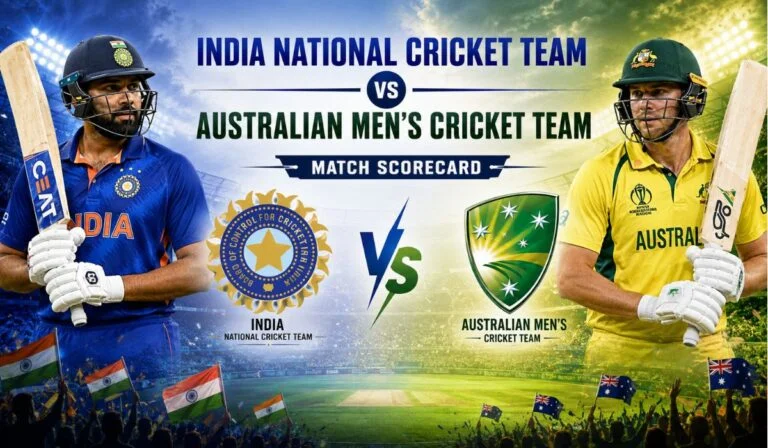
Cricket matches between Australia and India have developed into some of the most exciting contests in international cricket. Both teams have a remarkable history, talented players, experienced captains, and passionate supporters. Whenever these sides meet in a Test match, One Day International (ODI), or Twenty20 International (T20I), expectations are naturally high. Their encounters often feature impressive batting performances, disciplined bowling, exceptional fielding, and dramatic changes in momentum.
The australian men’s cricket team vs india national cricket team match scorecard is an important source of information for fans who want to understand how a particular match unfolded. It provides a detailed record of runs scored, wickets lost, overs completed, individual batting contributions, bowling figures, extras, and the final result. Rather than simply showing which team won, a complete scorecard explains the performances and decisions that shaped the contest.
For followers who cannot watch an entire match, the scorecard offers a convenient way to catch up with the action. It also helps analysts, cricket enthusiasts, and fantasy cricket followers evaluate individual performances and compare the strengths of both teams.
Australian Men’s Cricket Team vs India National Cricket Team: Recent Match Results
As of November 2026, the most recent completed senior men’s bilateral T20I between Australia and India was the fourth T20I of India’s 2025 tour of Australia, played on November 6, 2025, at Carrara Stadium. India delivered an impressive performance, scoring 167 runs for eight wickets in 20 overs. Australia were subsequently dismissed for 119 runs in 18.2 overs, giving India a convincing 48-run victory. The fifth T20I, scheduled for November 8 at Brisbane, was abandoned without a result. In the preceding ODI series, Australia won the first two matches before India secured a nine-wicket victory in the third ODI at Sydney.
These encounters demonstrate why the rivalry continues to attract international attention. Australia have traditionally been recognised for their aggressive approach, competitive mentality, and strong fast-bowling resources, while India have developed a reputation for technically skilled batters, quality spin options, and increasingly powerful pace attacks. The results of individual matches can change quickly, making detailed scorecards valuable for understanding each team’s performance.
Australia vs India Match Scorecard: Recent Results at a Glance
The following table provides an overview of important matches from the 2025 tour of Australia. It includes the three ODIs and the five-match T20I series, helping readers understand the recent competitive history between the teams.
| Match | Australia | India | Result |
|---|---|---|---|
| 1st ODI, October 19, 2025 | 131/3 | 136/9 | Australia won by 7 wickets (DLS) |
| 2nd ODI, October 23, 2025 | 265/8 | 264/9 | Australia won by 2 wickets |
| 3rd ODI, October 25, 2025 | 236 | 237/1 | India won by 9 wickets |
| 1st T20I, October 29, 2025 | No result | 97/1 | Abandoned |
| 2nd T20I, October 31, 2025 | 126/6 | 125 | Australia won by 4 wickets |
| 3rd T20I, November 2, 2025 | 186/6 | 188/5 | India won by 5 wickets |
| 4th T20I, November 6, 2025 | 119 | 167/8 | India won by 48 runs |
| 5th T20I, November 8, 2025 | No result | No result | Abandoned |
The results show that both teams experienced successful periods during the tour. Australia started strongly in the ODI series, whereas India recovered with a commanding performance in Sydney. In the T20I competition, India established greater consistency in the completed matches and secured the series advantage.
Understanding the Australian Men’s Cricket Team vs India National Cricket Team Match Scorecard
A cricket scorecard is more than a summary of runs and wickets. It is a structured record that helps readers understand the progress of an entire match. The australian men’s cricket team vs india national cricket team match scorecard generally contains separate batting and bowling sections for both teams, along with innings totals, extras, fall of wickets, and the final match result.
The batting section records the contribution of every player who comes to the crease. Important columns include runs scored, balls faced, boundaries, sixes, and strike rate. For example, a batter scoring 70 runs from 45 deliveries has made a different type of contribution from someone scoring 70 runs from 90 deliveries. Both performances add the same number of runs, but their impact depends on the match format and situation.
The bowling section provides another important perspective. It records overs bowled, maiden overs, runs conceded, wickets taken, and economy rate. These figures help readers identify which bowlers controlled the scoring rate and which players created breakthroughs. A bowler taking three wickets while conceding relatively few runs can have a significant influence on the final result.
Important Scorecard Terms Every Cricket Fan Should Know
Some common abbreviations appear in almost every professional cricket scorecard. Understanding them makes following a match considerably easier, especially for people who are still learning the technical aspects of cricket.
-
R (Runs): Total runs scored by an individual batter.
-
B (Balls): Number of deliveries faced by the batter.
-
4s and 6s: Number of boundaries and sixes hit.
-
O, M, R and W: Overs, maidens, runs conceded, and wickets taken by a bowler.
-
ECO: The average number of runs conceded per over.
These statistics work together to explain the match rather than simply presenting the final score. They also make it easier to compare individual performances across different formats.
Australia vs India ODI Match Performance and Analysis
One Day International cricket requires a balance between patience and attacking intent. Each team normally receives 50 overs, which gives batters enough time to establish partnerships while maintaining a healthy scoring rate. Australia and India have both demonstrated their ability to adapt to different conditions in this format.
The third ODI of the 2025 Australian tour provides a particularly interesting example. Australia scored 236 runs in 46.4 overs at the Sydney Cricket Ground. India responded with 237 runs for just one wicket in 38.3 overs, completing a nine-wicket victory. The result highlighted India’s ability to chase a target efficiently without exposing too many batters to unnecessary pressure.

In the earlier second ODI, Australia successfully chased India’s total of 264/9, reaching 265/8 and winning by two wickets. This was a much closer contest, demonstrating the importance of maintaining composure during the final overs. Even when a batting side loses wickets regularly, a well-managed chase can produce a positive result.
Batting Contributions in ODI Cricket
In a 50-over match, opening batters generally focus on providing a stable beginning. They assess the pitch, understand the movement of the new ball, and avoid losing wickets too early. Middle-order players then build partnerships and increase the scoring rate, while lower-order batters contribute valuable runs towards the end.
India’s successful chase in Sydney demonstrated how a strong batting partnership can simplify a seemingly challenging target. Australia’s earlier ODI victories, on the other hand, illustrated the importance of controlling the middle overs and finding wickets at important moments.
Bowling and Fielding Performance
Bowling performances are equally important in determining the outcome of an ODI. Fast bowlers often look for movement with the new ball, while spinners can become influential during the middle overs. Death-over specialists are expected to restrict scoring through accurate yorkers, slower deliveries, and well-planned field placements.
Fielding also has a major influence on the final scorecard. A direct-hit run-out, a difficult boundary catch, or a well-timed diving stop can change the direction of a match. These contributions may not always receive the same attention as centuries or five-wicket hauls, but they are important parts of team success.
Australia vs India T20 International Match Scorecard
T20 International cricket brings a different level of excitement because each team has only 20 overs to make an impact. Batters are expected to score quickly, bowlers must control the scoring rate, and fielders need to remain alert throughout the innings. Australia and India have several players who are particularly effective in this format, making their T20I contests entertaining for cricket followers.
The fourth T20I of November 6, 2025, was an excellent example of India’s all-round performance. India posted 167/8 in their allotted 20 overs before restricting Australia to 119 in 18.2 overs. The 48-run victory reflected India’s ability to combine competitive batting with effective bowling. Australia’s batting lineup struggled to maintain momentum during the chase, allowing India to take control of the contest.
The third T20I, played in Hobart on November 2, offered a different type of contest. Australia scored 186/6, but India successfully chased the target by reaching 188/5 in 18.3 overs. This five-wicket victory demonstrated India’s aggressive batting approach and ability to accelerate when required. Such contrasting results explain why fans regularly follow the australian men’s cricket team vs india national cricket team match scorecard to understand the performances behind each result.
Key Players Who Can Influence Australia vs India Matches
Both teams have produced outstanding international cricketers across different generations. Their success has often depended on individual players delivering strong performances at important moments. Although team combinations and playing elevens change between series, certain qualities consistently influence the outcome of Australia-India matches.
Australian Team Players
Australian cricket has traditionally relied on aggressive top-order batting, strong pace bowling, and experienced all-rounders. Its batters generally look for opportunities to put pressure on opposition bowlers, particularly during the powerplay and middle overs. Their ability to score quickly can create challenging targets for India.
Australian fast bowlers are another important part of the team’s strength. They use pace, bounce, swing, and variations to trouble batters in different conditions. Spinners also contribute by controlling runs and creating opportunities when opposition batters attempt attacking shots.
Indian Team Players
India’s cricketing strength comes from its combination of technically accomplished batters, experienced all-rounders, and versatile bowlers. The batting lineup generally includes players capable of building innings as well as accelerating the scoring rate. This flexibility is particularly useful when chasing challenging targets.
India’s bowling department also offers several options, including fast bowlers, left-arm seamers, wrist spinners, and finger spinners. Having different bowling styles allows the captain to adjust strategies according to the pitch, weather, opposition batting lineup, and match situation.
How Pitch and Weather Conditions Affect the Scorecard
Pitch conditions can have a considerable influence on the final result of an international cricket match. Some Australian grounds offer additional bounce and pace, which can benefit fast bowlers who know how to use the conditions. Batters who adjust their footwork and shot selection can also score heavily on these surfaces.
Indian pitches can provide different challenges depending on the venue and preparation. Some grounds offer good batting conditions, while others provide assistance to spinners as the match progresses. These differences make adaptability an important quality for both teams.
Weather conditions also matter. Rain interruptions can reduce the number of available overs and bring the Duckworth-Lewis-Stern method into consideration. This is particularly relevant in limited-overs cricket, where a revised target may significantly change the strategy required from the chasing team.
Why Cricket Fans Follow Detailed Match Scorecards
A detailed scorecard helps supporters understand more than the final outcome. It allows them to examine individual contributions, compare players, and identify the moments when a team gained or lost control of a match.
Some of the main reasons cricket followers check scorecards include:
-
Player performance: Understanding individual batting and bowling contributions.
-
Match analysis: Identifying partnerships, important wickets, and scoring patterns.
-
Team comparison: Evaluating the strengths and weaknesses of both sides.
-
Historical records: Comparing results and performances across different series.
For cricket enthusiasts, these details make following international matches more informative. They can also help readers understand why a team won despite scoring fewer runs in certain phases or losing important wickets early in an innings.
Australia vs India Head-to-Head Rivalry Across Formats
The rivalry between Australia and India extends across Test matches, ODIs, and T20Is. Each format presents different challenges, and the teams have enjoyed memorable victories in all three. Test cricket focuses on endurance, technique, and tactical planning over several days. ODI cricket demands consistency across 50 overs, while T20I matches reward quick decision-making and aggressive execution.

The 2024–25 Border-Gavaskar Trophy in Australia was another significant chapter in this rivalry. Australia won the five-match Test series 3–1, while India began the competition with an impressive victory in Perth. The series featured challenging batting conditions, important bowling performances, and several competitive sessions.
The Champions Trophy semi-final in March 2025 provided another memorable contest. India defeated Australia by four wickets, successfully chasing 265 runs in Dubai. This result demonstrated that Australia’s strong performances in Test cricket did not necessarily guarantee similar outcomes in limited-overs competitions.
The australian men’s cricket team vs india national cricket team match scorecard therefore remains relevant to supporters interested in comparing performances across different competitions. Looking at several matches rather than one result provides a better understanding of the rivalry.
What to Check Before Analysing an Australia vs India Scorecard
Readers should consider a few important details before drawing conclusions from match statistics. First, they should identify the format because a batting strike rate of 120 has a different meaning in T20 cricket than in Test cricket. Second, they should check the venue and pitch conditions because these factors influence scoring opportunities and bowling performances.
It is also useful to consider the match situation. A batter scoring 40 runs while chasing a difficult target may provide a more valuable contribution than someone scoring the same number of runs when the team is already comfortably placed. Similarly, a bowler taking two wickets during the final overs might have a greater impact than the figures alone suggest.
The toss, batting order, partnerships, extras, and fall of wickets can also provide useful information. Considering these details makes scorecard analysis more accurate and prevents readers from judging players solely on their individual statistics.
Conclusion
Australia and India share one of the most competitive rivalries in international cricket. Their matches consistently attract attention because both teams possess talented players, experienced leadership, and the ability to produce outstanding performances under pressure. From closely contested ODI finishes to exciting T20I run chases and challenging Test matches, their encounters offer plenty of memorable cricketing moments.
The australian men’s cricket team vs india national cricket team match scorecard provides a comprehensive way to understand these contests. It records individual contributions, team totals, bowling figures, partnerships, and final results, allowing supporters to explore every important aspect of a match. Whether someone follows cricket for entertainment, statistical analysis, or a deeper understanding of the game, examining detailed scorecards makes the experience more rewarding.
As international cricket continues to evolve, future Australia-India encounters will bring new players, different strategies, and fresh challenges. Keeping track of match statistics and individual performances will remain an excellent way to follow this historic rivalry and appreciate the competitive spirit of both national teams.