The rivalry between the India women’s national cricket team and Sri Lanka women has become an important part of international women’s cricket. Both teams have produced competitive performances across One Day Internationals (ODIs), Twenty20 Internationals (T20Is), and major tournaments. India are known for their experienced batting lineup, disciplined bowling attack, and strong performances under pressure, while Sri Lanka have developed a competitive side capable of challenging established teams through aggressive batting and clever spin bowling.
For supporters, the India women’s national cricket team vs Sri Lanka women match scorecard is a useful way to understand how a match unfolds. A scorecard records runs, wickets, overs, individual batting contributions, bowling figures, extras, and the final result. It also helps readers identify partnerships and turning points that may not be immediately apparent from the final score. Because the two teams meet in different formats and tournaments, the exact figures depend on the particular match being reviewed. This article explains how to interpret the scorecard, evaluate player performances, and understand the tactical factors that shape this international rivalry.
Latest Match Scorecard: India Women vs Sri Lanka Women
One of the major recent meetings between these teams took place in the women’s cricket final at the 2026 Asian Games. India delivered an outstanding performance with both bat and ball, setting a challenging total before restricting Sri Lanka to a comparatively low score.
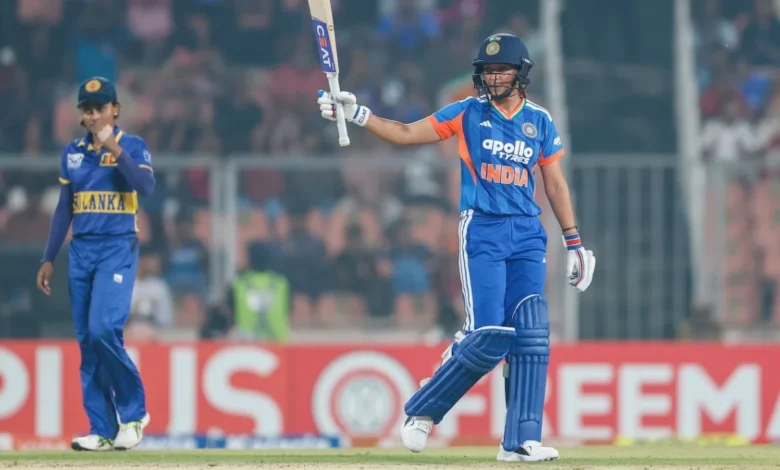
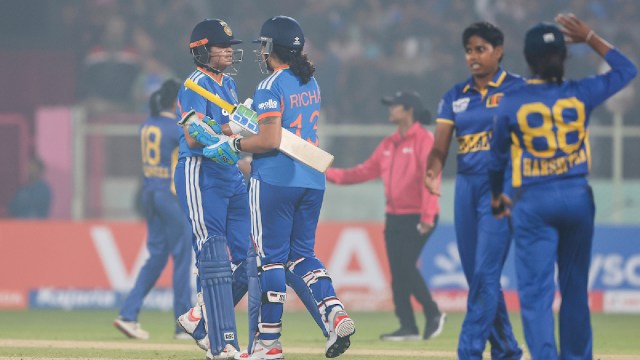
India won the toss and elected to bat first. The opening batters established a strong foundation, while the middle order maintained the scoring momentum. Smriti Mandhana produced an impressive innings, and Richa Ghosh accelerated the scoring during the closing overs. Sri Lanka struggled to build partnerships during their chase and were dismissed well short of the target.
Match Summary
| Match detail | Information |
|---|---|
| Teams | India Women vs Sri Lanka Women |
| Tournament | Women’s Asian Games 2026 |
| Match | Final |
| Venue | Korogi Sports Park, Nisshin |
| India Women | 216/3 in 20 overs |
| Sri Lanka Women | 69 all out in 15.4 overs |
| Result | India Women won by 147 runs |
| Top scorer for India | Smriti Mandhana, 79 runs |
| Other key contribution | Richa Ghosh, 49 not out |
Source: Published match scorecard for the 2026 Asian Games final.
This result demonstrated India’s ability to combine aggressive batting with effective bowling. The 147-run victory was a significant margin in a final and highlighted the difference between the two teams’ performances on the day.
India Women’s Batting Performance
India’s batting display was built around a combination of strong opening partnerships and an explosive finish. Shafali Verma scored 48 runs from 29 deliveries, providing an attacking start. Her innings included three fours and three sixes, helping India establish an early scoring rhythm. Smriti Mandhana then played a major role in taking the innings forward, combining controlled stroke play with powerful boundary hitting.
Mandhana scored 79 runs from 45 balls, including five fours and seven sixes. Her innings kept the scoring rate high without allowing the opposition to regain control. Harmanpreet Kaur added 19 runs, while Richa Ghosh finished unbeaten on 49 from just 22 deliveries. Ghosh struck six fours and three sixes, giving India a formidable total of 216/3. These contributions show why the India women’s national cricket team vs Sri Lanka women match scorecard is useful for identifying the players who influenced the result most significantly.
India Women Batting Scorecard
| Batter | Runs | Balls | Fours | Sixes |
|---|---|---|---|---|
| Shafali Verma | 48 | 29 | 3 | 3 |
| Smriti Mandhana | 79 | 45 | 5 | 7 |
| Harmanpreet Kaur | 19 | 17 | 3 | 0 |
| Richa Ghosh | 49* | 22 | 6 | 3 |
| Bharti Fulmali | 7* | 7 | 1 | 0 |
| Extras | 14 | — | — | — |
| Total | 216/3 | 20 overs | — | — |
Not out. The table lists the principal batting contributions from the match scorecard.
Sri Lanka Women’s Batting Performance
Sri Lanka entered the chase needing 217 runs to win, which required a sustained scoring rate and substantial partnerships. However, India’s bowlers put pressure on the batting lineup early, making it difficult for the Sri Lankan players to settle at the crease.
Captain Chamari Athapaththu and the other batters needed to build a stable foundation before attempting an aggressive chase. Instead, wickets fell regularly, leaving the middle and lower order with little opportunity to recover. Sri Lanka were eventually dismissed for 69 in 15.4 overs.
The innings illustrated how a large target can influence batting decisions. When a team loses wickets early, it must balance the need for quick runs against the importance of preserving its remaining batters. Sri Lanka could not establish that balance in this final, while India maintained pressure through consistent bowling and fielding.
Sri Lanka Women Batting Summary
| Match statistic | Performance |
|---|---|
| Target | 217 runs |
| Total score | 69 all out |
| Overs played | 15.4 |
| Run rate | Approximately 4.40 |
| Runs required for victory | 148 more than the final score |
| Result | Lost by 147 runs |
Bowling Analysis and Key Contributions
Bowling was one of the decisive factors in the final. India’s attack had the advantage of defending a substantial total, allowing the bowlers to attack the stumps, challenge the batters with changes of pace, and create pressure through disciplined fielding.
The scorecard should be read alongside the number of overs bowled, runs conceded, wickets taken, and economy rate. These figures help distinguish between a bowler who takes wickets through sustained pressure and one who benefits from an attacking batter taking risks. In a T20 match, even a short spell can influence the outcome if it breaks a developing partnership.
Sri Lanka’s bowlers faced a difficult task during India’s innings. Mandhana, Verma, and Ghosh all scored quickly, limiting the opposition’s ability to build pressure. When analysing a match scorecard, it is therefore important to consider both teams’ performances rather than focusing only on the winning side’s batting numbers.
Key Turning Points in the Match
Several phases contributed to India’s convincing victory in the 2026 Asian Games final.
-
The opening partnership: Shafali Verma helped India start aggressively and put pressure on Sri Lanka’s bowling attack.
-
Mandhana’s innings: Her 79 runs provided stability and scoring momentum through the middle overs.
-
The final overs: Richa Ghosh’s unbeaten 49 accelerated the innings and helped India cross 200.
-
Early pressure during the chase: Sri Lanka lost wickets before establishing a substantial partnership.
-
India’s consistent bowling: The attack continued to challenge the batters until Sri Lanka were all out.
Together, these phases explain why the final scorecard reflects more than a difference in total runs. It captures India’s ability to dominate the match from the first innings through the final wicket.
How to Read the India Women vs Sri Lanka Women Match Scorecard
Readers searching for the India women’s national cricket team vs Sri Lanka women match scorecard should understand the key abbreviations used in cricket statistics. A scorecard presents a compact record of individual and team performances, making it easier to compare players and identify the most influential contributions.
| Term | Meaning |
|---|---|
| R | Runs scored |
| B | Balls faced |
| 4s | Number of fours |
| 6s | Number of sixes |
| SR | Batting strike rate |
| O | Overs bowled |
| M | Maiden overs |
| W | Wickets taken |
| ECO | Bowling economy rate |
| RR | Team run rate |
| * | Batter remained not out |
A batting strike rate indicates how quickly a batter scores, while a bowling economy rate shows how many runs a bowler concedes per over. These statistics are especially important in T20 cricket, where scoring speed and wicket-taking opportunities can change a match rapidly.
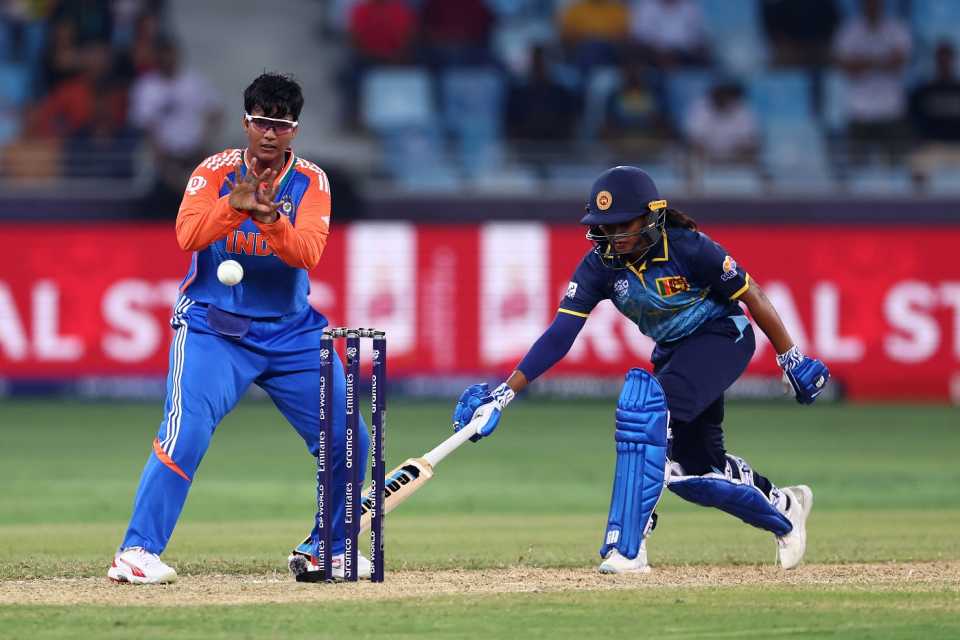
India Women vs Sri Lanka Women: Players to Watch
Both teams have players who can influence future encounters through their individual skills and experience.
-
Smriti Mandhana: A technically accomplished batter capable of scoring quickly through the off side and playing attacking shots against pace and spin.
-
Shafali Verma: An aggressive opener who can give India a fast start and change the momentum during the powerplay.
-
Harmanpreet Kaur: An experienced middle-order batter whose ability to handle pressure is valuable in important matches.
-
Richa Ghosh: A powerful wicketkeeper-batter who can accelerate during the closing overs.
-
Chamari Athapaththu: An influential Sri Lankan batter who can attack from the beginning and contribute with her bowling when required.
-
Kavisha Dilhari: An all-round option for Sri Lanka who can provide useful contributions with both bat and ball.
The influence of these players depends on conditions, team selection, fitness, and the format being played. Their performances in individual matches should be assessed through the relevant scorecard rather than assumed from their reputations alone.
Tactical Differences Between the Teams
India generally benefit when their top order establishes a fast scoring rate and their middle order continues the attack. Their batting depth can create opportunities to post competitive totals even if one or two players are dismissed early. With the ball, disciplined lines, varied pace, and accurate spin can help them defend large scores.
Sri Lanka’s opportunities often depend on their senior players creating partnerships and their bowlers disrupting India’s rhythm. Their batters must assess conditions carefully, especially when facing a strong attack during the powerplay. Effective spin bowling, smart field placements, and accurate death-over execution can also make a substantial difference.
The India women’s national cricket team vs Sri Lanka women match scorecard provides the numerical evidence needed to evaluate these tactical approaches. Comparing scores across ODIs and T20Is can also reveal whether a team’s strengths are more effective in longer innings or shorter, high-intensity contests.
Why This Match Matters for Women’s Cricket
Matches between India and Sri Lanka contribute to the development and visibility of women’s international cricket. These contests give players opportunities to compete under pressure, develop their skills, and build experience in major tournaments. They also attract supporters who follow individual performances, team rankings, and the progress of emerging players.
The Asian Games final was particularly notable because it ended with India winning by 147 runs. Such a result provides a clear example of how batting depth and bowling discipline can combine to produce a commanding performance. At the same time, Sri Lanka can use matches of this nature to evaluate their batting partnerships, bowling plans, and approach to high-pressure chases.
Scorecards also help coaches, analysts, journalists, and fans evaluate progress objectively. Beyond the final result, statistics reveal where teams scored quickly, when wickets fell, and which partnerships helped determine the outcome.
Conclusion
The India women’s national cricket team vs Sri Lanka women match scorecard offers a detailed view of the performances that shape this international rivalry. In the 2026 Asian Games final, India scored 216/3 before dismissing Sri Lanka for 69, securing a 147-run victory. Smriti Mandhana’s 79, Shafali Verma’s attacking 48, and Richa Ghosh’s unbeaten 49 were among India’s leading batting contributions.
For cricket fans, the scorecard is a valuable tool for understanding individual statistics, team strategies, and decisive moments. Checking the specific match date and tournament is essential because India and Sri Lanka compete in multiple formats. By reviewing batting figures, bowling performances, partnerships, and the final result together, readers can gain a clearer understanding of how each match develops and why one team ultimately wins.