India vs South Africa: Cricket Rivalry, Records and Future Outlook

International cricket has witnessed several exciting rivalries, but india vs south africa remains one of the most competitive encounters across all three formats of the game. Both nations possess talented cricketers, experienced leadership, powerful batting lineups and highly skilled bowling attacks. Whenever these teams meet, cricket enthusiasts expect an entertaining contest filled with remarkable performances, unexpected developments and challenging situations.
The rivalry has evolved considerably since South Africa returned to international cricket in 1991. From memorable Test matches to high-scoring One Day Internationals and thrilling T20 World Cup encounters, both teams have contributed significantly to cricket history. Their contrasting playing conditions, tactical approaches and cricketing traditions make every series particularly interesting.
As of November 2026, the competition between these cricketing nations remains relevant to the changing landscape of international cricket. South Africa’s recent Test success, India’s white-ball achievements and the emergence of talented young players have created fresh opportunities for both teams. Understanding their history, recent performances and future prospects provides a deeper appreciation of this remarkable sporting rivalry.
History of the Indian and South African Cricket Rivalry
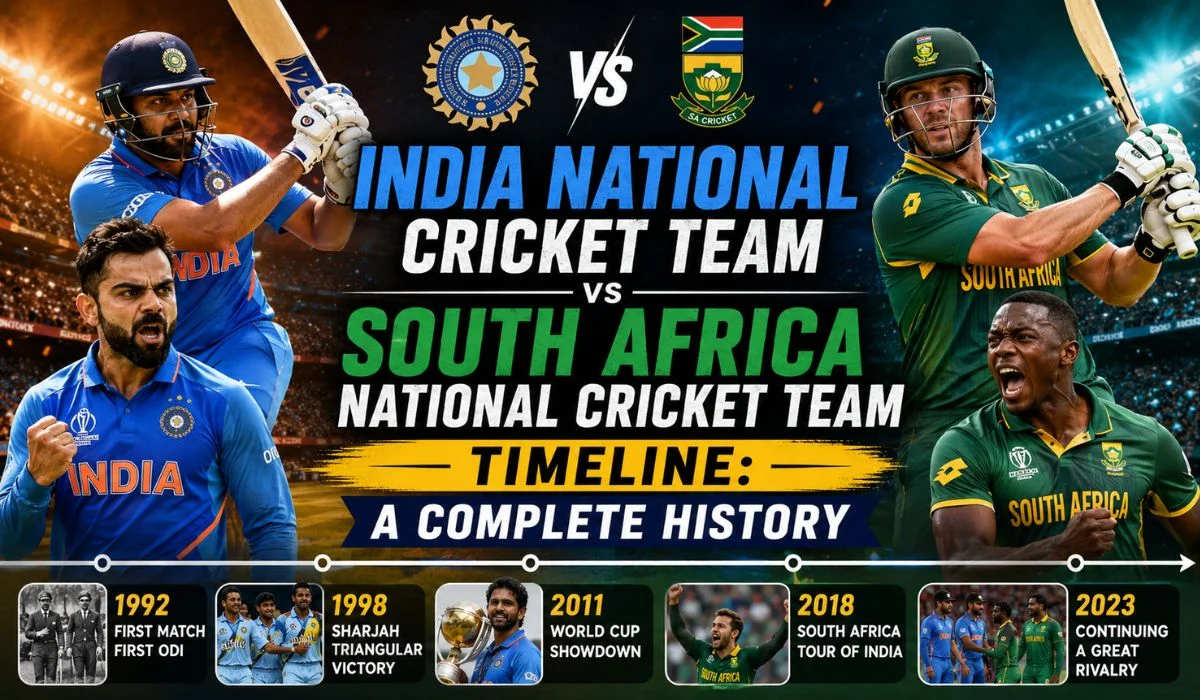
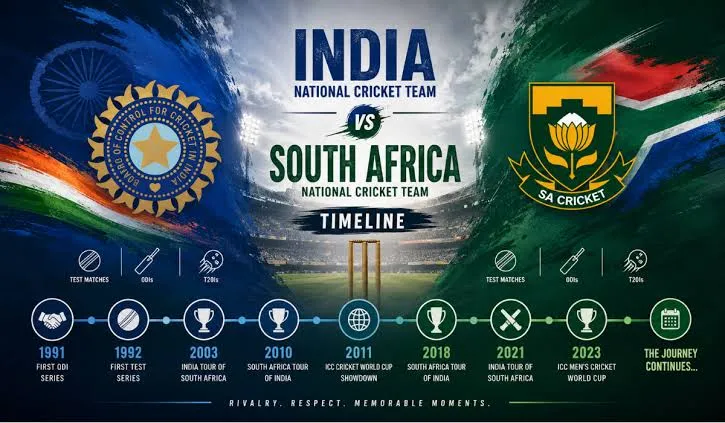
The cricketing relationship between India and South Africa began a new chapter in November 1991 when South Africa toured India following its return to international cricket. The historic series represented an important moment for South African cricket and helped establish a sporting relationship that would develop into a highly competitive rivalry. Over the following decades, both nations produced legendary players who contributed to some of the most memorable matches in international cricket.
During the early years, South Africa frequently demonstrated its strength through disciplined fast bowling, exceptional fielding and technically sound batting. India gradually developed a more balanced approach, combining its traditional batting expertise and spin bowling with a competitive pace attack. This transformation allowed India to challenge South Africa more effectively, particularly in overseas conditions. Today, their rivalry reflects decades of sporting development, strategic innovation and mutual competition at the highest level.
Why india vs south africa Is a Special Cricket Rivalry
Unlike rivalries that depend heavily on geographical proximity, the competition between India and South Africa is largely shaped by cricketing quality. Both teams have consistently produced world-class players capable of changing matches through individual brilliance. Their encounters frequently involve battles between aggressive opening batters, intelligent middle-order players, experienced fast bowlers and adaptable spinners.
Another important feature is the difference in playing conditions. Indian pitches traditionally offer more assistance to spin bowlers as matches progress, while South African surfaces often provide additional pace, movement and bounce. These contrasting environments challenge visiting players to adjust their techniques. Consequently, victories away from home carry particular significance and demonstrate a team’s ability to perform beyond familiar conditions.
Latest Cricket Updates and Current Scenario in 2026
The 2026 cricket season has added another exciting chapter to this rivalry. On February 22, 2026, South Africa defeated India by 76 runs during the Super Eight stage of the ICC Men’s T20 World Cup at the Narendra Modi Stadium in Ahmedabad. South Africa scored 187 runs for seven wickets before dismissing India for 111. David Miller played an impressive innings of 63 runs from 35 deliveries, while Marco Jansen delivered an outstanding bowling performance with four wickets for 22 runs.
The result highlighted South Africa’s ability to challenge India even in familiar Indian conditions. However, India’s subsequent progress to the tournament final demonstrated the team’s resilience. By November 2026, South Africa had also strengthened its position at the top of the World Test Championship standings following a 2–0 series victory against Bangladesh. Meanwhile, India continued its Test championship campaign against New Zealand. These developments reflect the evolving competitive strengths of both cricketing nations.
Head-to-Head Performance Across Cricket Formats
The india vs south africa rivalry has produced different patterns across Test cricket, ODIs and T20 Internationals. South Africa has historically maintained a strong record in Test cricket and the longer white-ball format. India, however, has become increasingly competitive through improved overseas performances, greater bowling depth and modern batting strategies. T20 cricket has brought additional unpredictability to their encounters.
The following table highlights significant results and milestones that have shaped their cricketing relationship.
| Year | Format or Tournament | Significant Result |
|---|---|---|
| 1991 | ODI Series | India won the series 2–1 |
| 2010 | ODI Series | Sachin Tendulkar scored an unbeaten 200 |
| 2018 | ODI Series | India won the series 5–1 |
| 2023 | ODI World Cup | India won by 243 runs |
| 2024 | T20 World Cup Final | India won by 7 runs |
| 2025 | Test Series | South Africa won 2–0 |
| 2025 | ODI Series | India won 2–1 |
| 2025 | T20I Series | India won 3–1 |
| 2026 | T20 World Cup Super Eight | South Africa won by 76 runs |
These results demonstrate how competitive advantages can change depending on the format, venue and team composition. Past achievements provide valuable context, although recent form and match conditions remain important when assessing future encounters.
Test Cricket: A Battle of Patience and Technical Excellence
Test cricket represents one of the most demanding aspects of the competition between these two nations. South African fast bowlers traditionally challenge Indian batters with movement, bounce and disciplined bowling. Indian spinners, meanwhile, frequently create difficult situations for South African players on turning surfaces. Success requires patience, technical accuracy and the ability to maintain concentration over extended periods.
South Africa’s historic 2–0 Test series victory in India in November 2025 demonstrated that traditional home advantages are not always sufficient. The visitors adapted effectively to unfamiliar conditions and capitalised on important opportunities. For India, the defeat highlighted the importance of improving batting consistency against different bowling styles. Modern Test cricket requires both teams to develop adaptable strategies rather than relying exclusively on their traditional strengths.
One Day Internationals: Balancing Aggression and Stability
ODI cricket provides an interesting combination of controlled aggression and tactical planning. India has frequently built successful innings through strong opening partnerships, intelligent middle-order batting and aggressive finishing. South Africa often approaches the format with powerful batters who can accelerate the scoring rate while maintaining pressure on opposing bowlers.
The india vs south africa ODI encounters have featured several extraordinary individual achievements. Sachin Tendulkar’s unbeaten double century in Gwalior in 2010 remains one of the most celebrated examples. India’s 5–1 ODI series victory in South Africa in 2018 also represented a major achievement in overseas cricket. Looking ahead to the 2027 ODI World Cup, both nations have strong reasons to develop balanced squads capable of performing consistently under demanding tournament conditions.
T20 Cricket and the Rise of Aggressive Strategies
Twenty20 cricket has transformed how India and South Africa approach international competition. Batters are encouraged to score quickly, bowlers must develop effective variations, and fielders are expected to prevent boundaries while creating dismissal opportunities. Even a single expensive over or dropped catch can significantly influence the final result.
India’s victory in the 2024 T20 World Cup final and South Africa’s convincing win during the 2026 tournament illustrate the unpredictable nature of this format. Neither historical records nor individual reputations guarantee success. Teams must respond intelligently to changing match situations, identify favourable bowling matchups and maintain composure during pressure-filled moments. Effective decision-making often becomes just as important as individual talent.
Key Indian Players and Their Contributions
India’s cricketing development has benefited from a combination of experienced performers and emerging talent. Jasprit Bumrah remains an influential fast bowler because of his unusual bowling action, accuracy and ability to deliver effective yorkers. Shubman Gill brings elegant stroke play and technical ability, while Yashasvi Jaiswal represents an aggressive batting approach that has become increasingly valuable in modern cricket.
Players such as Hardik Pandya, Axar Patel, Arshdeep Singh and Suryakumar Yadav have also contributed important skills across relevant formats. Their different abilities provide India with tactical flexibility. However, player availability, fitness and format-specific selection influence the final team composition. India’s continued success depends on developing reliable replacements and maintaining a strong balance between experienced cricketers and younger players.
Key South African Players and Their Strengths
South Africa continues to benefit from a talented cricketing structure that produces competitive international players. Kagiso Rabada remains a prominent fast bowler with the ability to generate pace and movement. Marco Jansen offers additional variety through his left-arm bowling and useful lower-order batting. Aiden Markram provides technical batting quality and valuable leadership experience.
Other influential players include David Miller, Heinrich Klaasen in the recent history of the rivalry, Temba Bavuma, Keshav Maharaj and Tristan Stubbs. South Africa’s ability to combine aggressive batting with disciplined bowling makes the team particularly dangerous. Its growing confidence in major tournaments also reflects improvements in tactical preparation and collective performance.
How Pitch Conditions Influence Match Results
Playing surfaces have a considerable impact on the outcome of india vs south africa matches. In South Africa, pitches at venues such as Centurion and Johannesburg frequently provide assistance to fast bowlers. Batters must demonstrate careful shot selection, strong defensive techniques and an understanding of how the ball behaves after bouncing.
Indian conditions generally present different challenges. Dry surfaces can offer increasing assistance to spinners, particularly during longer matches. However, many modern Indian limited-overs pitches also support high-scoring contests. Weather, moisture, grass coverage and dew can further influence team decisions. Captains must evaluate these factors before selecting bowling combinations or deciding whether to bat first after winning the toss.
Memorable Encounters That Defined the Rivalry
Sachin Tendulkar’s Historic Double Century
On February 24, 2010, Sachin Tendulkar became the first male cricketer to score a double century in an ODI. His unbeaten 200 against South Africa in Gwalior demonstrated exceptional batting control, fitness and concentration. The achievement changed perceptions about what individual batters could accomplish within 50 overs.
India’s 2024 T20 World Cup Final Victory
The 2024 T20 World Cup final in Barbados produced one of the most memorable contests between the two countries. India defeated South Africa by seven runs on June 29, ending its long wait for another senior men’s ICC trophy. Disciplined death bowling and an extraordinary boundary catch from Suryakumar Yadav contributed significantly to the dramatic result.
South Africa’s Historic Test Series Victory in 2025
South Africa recorded an impressive 2–0 Test series victory in India during November 2025. Winning a Test series in Indian conditions represented a major achievement for the visiting team. Its ability to handle spin, build useful partnerships and maintain bowling discipline demonstrated the importance of preparation and adaptability in international cricket.
South Africa’s T20 World Cup Performance in 2026
South Africa’s 76-run victory in Ahmedabad during the 2026 T20 World Cup provided another significant moment in the rivalry. Powerful middle-order batting and effective wicket-taking bowling helped the team overcome India. The match reinforced the importance of maintaining momentum throughout an innings rather than depending entirely on a strong start.
Important Factors That Determine Match Results
Although individual talent plays a major role, several collective factors influence the outcome of international cricket matches. Teams that execute their plans consistently are generally better positioned to respond to unexpected challenges.
The following factors are particularly important:
-
Opening partnerships and effective powerplay management.
-
Bowling accuracy and intelligent use of variations.
-
Middle-order batting consistency under pressure.
-
Fielding efficiency and catching accuracy.
-
Tactical decisions based on pitch and weather conditions.
These elements work together throughout a match. A strong batting performance may become insufficient if bowlers fail to defend a competitive total. Similarly, excellent bowling can lose its impact when fielders miss important opportunities. Maintaining consistency across all departments remains essential.
Role of IPL in Strengthening the Cricket Rivalry
The Indian Premier League has played an influential role in bringing Indian and South African cricketers together. Several South African players have gained extensive experience competing in Indian conditions through franchise cricket. They have become familiar with local pitches, bowling patterns and the playing styles of leading Indian cricketers.
This experience has made international encounters increasingly tactical. Indian players also benefit from training alongside South African fast bowlers and powerful international batters. When these professionals represent their respective countries, they often possess valuable knowledge about their opponents. Consequently, preparation involves identifying new strategies rather than relying entirely on established weaknesses. Franchise cricket has therefore contributed to the technical development of players from both nations.
Modern Technology and Cricket Performance Analysis
Technology has become an essential part of contemporary cricket preparation. Coaches and analysts use video recordings, ball-tracking systems, performance statistics and detailed match reports to understand player behaviour. These tools help teams identify scoring opportunities, bowling weaknesses and suitable field placements.

During india vs south africa encounters, analytical preparation can influence decisions throughout a match. For example, a bowling coach might identify that a particular batter struggles against slower deliveries outside the off stump. Similarly, batting analysts may study a fast bowler’s preferred lengths during the powerplay. Technology provides useful information, but successful execution still depends on players making intelligent decisions under pressure.
The Growing Importance of Young Cricket Talent
Both India and South Africa recognise the importance of investing in younger cricketers. Domestic competitions, development programmes and franchise tournaments provide opportunities for emerging players to gain experience. Exposure to competitive cricket at an early stage helps young athletes develop confidence and improve their technical understanding.
India benefits from a large domestic cricket system that regularly introduces promising batters, bowlers and all-rounders. South Africa also possesses established development pathways capable of producing international-quality players. The challenge for both nations involves managing the transition between generations without losing consistency. Selecting players according to their abilities, form and suitability for particular formats can support long-term success.
Future Prospects and the 2027 Cricket World Cup
The upcoming 2027 ICC Men’s Cricket World Cup provides an important opportunity for both countries. South Africa, Zimbabwe and Namibia are scheduled to host the tournament, creating a particularly interesting competitive environment. South Africa could benefit from its familiarity with regional playing conditions, while India will need effective preparation for surfaces that may offer pace and bounce.
Both teams will require balanced squads capable of adapting to different opponents and match situations. Fast-bowling depth, dependable middle-order batting and effective all-rounders could become particularly valuable. Although predicting a winner this early would be unrealistic, the cricketing strengths of both nations suggest that their future encounters will continue attracting considerable attention.
Impact of the Rivalry on International Cricket Fans
Cricket enthusiasts appreciate this rivalry because it frequently delivers competitive matches and high-quality individual performances. Supporters from both countries follow international tournaments, bilateral series and franchise competitions with considerable interest. Social media discussions and detailed match analysis have also encouraged fans to develop a deeper understanding of cricket strategies.
Beyond entertainment, these encounters contribute to the international popularity of cricket. Young players can learn from the technical discipline, determination and adaptability demonstrated by professional athletes. Competitive matches also remind audiences that sporting success requires continuous improvement, teamwork and the ability to recover from disappointing results.
Frequently Asked Questions
1. When did India and South Africa first play international cricket against each other?
India and South Africa began their modern international cricket rivalry in November 1991. South Africa toured India for a three-match ODI series following its return to international cricket.
2. Which team has a better historical record in international cricket?
South Africa has historically maintained an advantage in Test and ODI head-to-head results. India has become increasingly competitive across formats, particularly in T20 cricket and major limited-overs tournaments.
3. Who won the 2024 T20 World Cup final?
India won the 2024 ICC Men’s T20 World Cup final by defeating South Africa by seven runs. The match took place in Barbados on June 29, 2024.
4. Who won the 2026 T20 World Cup match between these teams?
South Africa defeated India by 76 runs during the Super Eight stage on February 22, 2026, in Ahmedabad. David Miller and Marco Jansen delivered influential performances.
5. Why is india vs south africa considered a competitive cricket rivalry?
The rivalry brings together talented players, contrasting playing conditions, effective bowling attacks and powerful batting lineups. Both countries have demonstrated the ability to defeat each other across multiple formats.
6. Did South Africa win the 2025 Test series in India?
Yes, South Africa won the two-match Test series in India by a margin of 2–0 in November 2025. The result represented a significant achievement for South African cricket.
7. Where will the 2027 ODI World Cup take place?
The 2027 ICC Men’s Cricket World Cup is scheduled to take place in South Africa, Zimbabwe and Namibia. The tournament will provide an important opportunity for both teams to compete for another international title.
Conclusion
The india vs south africa cricket rivalry represents an exciting combination of sporting excellence, tactical intelligence and competitive determination. From historic bilateral series to dramatic World Cup encounters, both nations have produced remarkable performances that continue to influence international cricket.
South Africa’s recent Test achievements and India’s impressive limited-overs capabilities demonstrate the distinctive strengths of both cricketing systems. Emerging players, modern performance analysis and increasingly adaptable strategies will continue shaping their future encounters. As preparations for upcoming international competitions progress, cricket enthusiasts can expect more challenging contests, exceptional individual achievements and memorable sporting moments from these two outstanding cricketing nations.