The Indian Premier League is one of the most exciting cricket tournaments in the world, bringing together international stars, emerging Indian players, and some of the most competitive batting performances in T20 cricket. Every season, fans follow not only their favourite franchises but also the individual contests that develop throughout the tournament. One of the biggest individual honours is the Orange Cap, an award that recognises the batter who scores the most runs during an IPL season. It celebrates consistency, attacking intent, match awareness, and the ability to deliver under pressure.
The orange cap in ipl 2026 is an important talking point for cricket followers who want to understand which batters are leading the run-scoring charts and how the competition is developing. A player might dominate the powerplay with aggressive stroke play, build an innings through the middle overs, or accelerate dramatically at the end. Each approach can contribute to a successful campaign, but the ultimate challenge is maintaining a high level of performance across multiple matches rather than relying on one outstanding innings.
The race also creates an interesting contest between different batting styles. Established international players may use their experience to control difficult situations, while younger cricketers can make a name for themselves with fearless performances. However, the latest leader, exact run totals, and final rankings must be checked against the current season’s official statistics. Without verified live figures, it would be misleading to declare a particular player the leader or invent a numerical leaderboard.
Who Won the Orange Cap in IPL 2026?
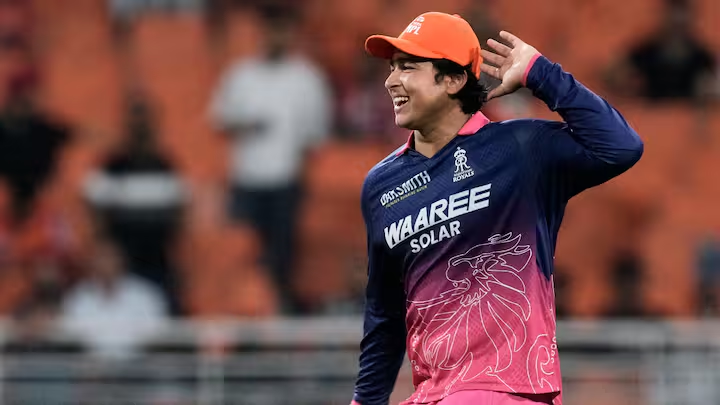
Vaibhav Sooryavanshi of Rajasthan Royals finished the 2026 season as the Orange Cap winner after scoring 776 runs in 16 matches. His remarkable campaign placed him ahead of Shubman Gill of Gujarat Titans, who accumulated 732 runs, and Sai Sudharsan, who finished with 722 runs. Sooryavanshi’s achievement was especially notable because of his extraordinary scoring speed, with a reported strike rate of approximately 237.30. He combined aggressive batting with the ability to produce substantial scores, making him one of the standout performers of the tournament.
IPL 2026 Orange Cap Final Leaderboard
The final leaderboard provides a clear picture of the leading batters and their contributions. Runs determine the primary ranking, while strike rate, batting average, boundaries, and individual scores help explain how each player performed. The following table presents the top 10 run-scorers from the completed 2026 tournament.
| Rank | Player | Team | Runs | Strike Rate |
|---|---|---|---|---|
| 1 | Vaibhav Sooryavanshi | Rajasthan Royals | 776 | 237.30 |
| 2 | Shubman Gill | Gujarat Titans | 732 | 163.02 |
| 3 | Sai Sudharsan | Gujarat Titans | 722 | 157.98 |
| 4 | Virat Kohli | Royal Challengers Bengaluru | 675 | 165.84 |
| 5 | Heinrich Klaasen | Sunrisers Hyderabad | 624 | 160.00 |
| 6 | Ishan Kishan | Sunrisers Hyderabad | 602 | 182.42 |
| 7 | KL Rahul | Delhi Capitals | 593 | 174.41 |
| 8 | Abhishek Sharma | Sunrisers Hyderabad | 563 | 204.72 |
| 9 | Mitchell Marsh | Lucknow Super Giants | 563 | 163.18 |
| 10 | Jos Buttler | Gujarat Titans | 526 | 152.46 |
Source: Final IPL 2026 batting statistics. Figures are based on the published season leaderboard; minor differences in rounding may occur between statistical summaries.
Vaibhav Sooryavanshi: The Standout Batter of IPL 2026
Vaibhav Sooryavanshi’s campaign was one of the defining stories of the tournament. Representing Rajasthan Royals, he scored 776 runs in 16 matches, averaging 48.50 and recording a strike rate of approximately 237.30. His final tally included five half-centuries and one century, supported by 63 fours and 72 sixes. These numbers demonstrate how effectively he converted opportunities into runs without depending exclusively on conventional accumulation. His boundary-hitting ability placed sustained pressure on opposition bowlers and gave his team the opportunity to build substantial totals.
What makes this performance particularly remarkable is the balance between scoring speed and total output. In T20 cricket, an attacking batter can change the momentum of a match within a few overs, but maintaining that approach across a complete campaign is considerably more difficult. Sooryavanshi managed to score quickly while compiling enough runs to finish ahead of experienced competitors. His success also illustrates how young players can make a significant impact when they combine natural attacking instincts with sound decision-making. For Rajasthan Royals, his performances provided an important batting contribution throughout the season.
Shubman Gill and Sai Sudharsan Challenge for the Top Spot
Shubman Gill finished second in the Orange Cap standings with 732 runs, while his Gujarat Titans teammate Sai Sudharsan secured third place with 722 runs. Their presence near the top of the leaderboard demonstrated the value of a productive opening partnership and a dependable top order. Gill’s tally included a century and six half-centuries, while Sudharsan registered a century and eight half-centuries. Both players consistently contributed to their team’s batting efforts, although their scoring rates were considerably lower than Sooryavanshi’s exceptional figure.
Virat Kohli and Other Major Batting Performances
Virat Kohli ended IPL 2026 with 675 runs for Royal Challengers Bengaluru, finishing fourth on the final leaderboard. His campaign featured a batting average of 56.25 and a strike rate of 165.84, alongside one century and five half-centuries. These figures reflected a productive season in which he combined consistency with attacking intent. Kohli’s ability to construct innings, rotate the strike, and target scoring opportunities remained important features of his batting. His contribution was also significant during the final, when he scored 75 runs from 42 balls against Gujarat Titans as Bengaluru secured the championship.
Heinrich Klaasen and Ishan Kishan also made strong contributions for Sunrisers Hyderabad. Klaasen scored 624 runs at a strike rate of 160.00, while Kishan accumulated 602 runs at 182.42. KL Rahul added 593 runs for Delhi Capitals and demonstrated his ability to score quickly, finishing with a strike rate of 174.41. Abhishek Sharma and Mitchell Marsh each scored 563 runs, although their strike rates differed substantially. These performances underline the depth of batting quality in the competition and show why the Orange Cap race remained interesting even beyond the top three positions.
How Is the Orange Cap Winner Determined?
The Orange Cap is awarded to the batter who scores the most runs during an IPL season. Unlike awards based on voting or subjective assessments, the central requirement is straightforward: a player must finish with the highest aggregate run total across the tournament. The standings can change as matches are played, especially when two or more batters are separated by a relatively small number of runs.
During the tournament, the cap is associated with the current leading run-scorer, and the leaderboard is updated as new performances are recorded. The final winner is determined after the season’s matches and playoffs have been completed. Players can improve their totals through boundaries, running between the wickets, and substantial innings under pressure.
The main statistics used to assess batting performance include:
-
Total runs scored across the tournament.
-
Batting average, which indicates runs scored per dismissal.
-
Strike rate, which measures runs scored per 100 balls faced.
-
Hundreds, half-centuries, boundaries, and sixes.
These measurements help fans understand a batter’s performance in greater detail, but total runs remain the deciding factor for the award. A player with a higher strike rate does not automatically win if another batter finishes with more runs.
Why the Orange Cap Matters in T20 Cricket
The Orange Cap is more than a visual symbol of individual success. It represents the ability to produce runs repeatedly in a format where conditions, bowling plans, and match situations can change rapidly. Batters must adapt to different pitches, stadium dimensions, opposition attacks, and team requirements. An aggressive start might be valuable on a flat surface, whereas a more cautious approach could be necessary when the ball moves or the pitch offers assistance to bowlers.
The award can also influence a player’s reputation and future opportunities. A strong IPL campaign may strengthen a batter’s standing within the franchise, increase public recognition, and contribute to discussions about selection for other competitions. However, the award does not measure every aspect of a player’s contribution. Fielding, leadership, strike rotation, and the ability to perform in high-pressure situations can also influence a team’s success.
For supporters, the contest adds another layer of excitement to the tournament. Fans can compare their favourite players, follow changes in the standings, and examine how individual performances contribute to team results. The final leaderboard provides a useful record of who delivered the greatest volume of runs over the season.
What Made the IPL 2026 Orange Cap Race Special?
The 2026 competition stood out because the leading batters brought different strengths to the same contest. Sooryavanshi’s extraordinary strike rate attracted attention, Gill and Sudharsan offered substantial totals through consistent top-order performances, and Kohli delivered a strong campaign backed by a high average. Klaasen, Kishan, and Rahul also demonstrated how power hitting and controlled innings could keep players competitive in the rankings.
Another notable feature was the number of batters who crossed the 600-run mark. Five players finished with at least 600 runs, showing that the competition at the top was not limited to one or two individuals. Such performances can help franchises maintain momentum, recover from early setbacks, and establish competitive totals. They also provide useful material for analysing batting strategies, player development, and the changing demands of modern T20 cricket.
The final standings should be understood as a record of the completed season rather than a prediction of future results. Each IPL edition brings different team combinations, playing conditions, and individual challenges. A player who dominates one year may encounter a different role or greater opposition scrutiny in the next, while emerging batters may build on their performances and become leading contenders.
Conclusion
The orange cap in ipl 2026 ultimately belonged to Vaibhav Sooryavanshi, whose 776 runs for Rajasthan Royals secured first place in the season’s batting standings. Shubman Gill finished second with 732 runs, followed by Sai Sudharsan with 722, while Virat Kohli completed the top four with 675 runs. Their performances highlighted the importance of consistency, scoring efficiency, and the ability to adapt to the challenges of T20 cricket. Sooryavanshi’s achievement was especially memorable because of his remarkable scoring rate and his ability to maintain a leading position against experienced international players. At the same time, the contributions of Gill, Sudharsan, Kohli, Klaasen, Kishan, and other top performers showed the depth of batting talent across the league. The final Orange Cap rankings provide a clear statistical picture of the season and celebrate the batters who made the greatest contribution with the bat.