Australian Men’s Cricket Team vs India National Cricket Team Timeline | Complete Rivalry History

Introduction
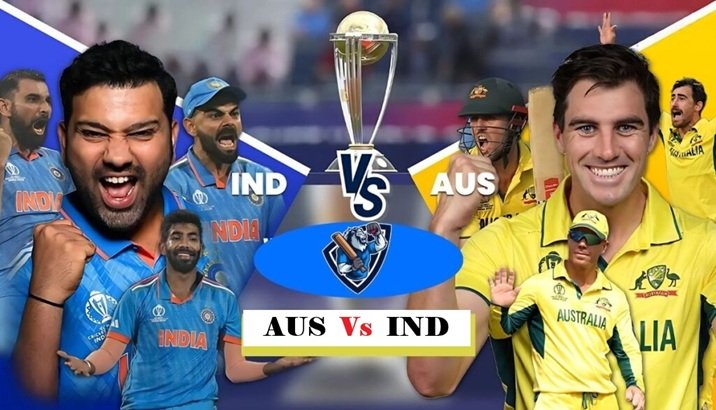
The competition between the australian men’s cricket team vs india national cricket team timeline is one of the most fierce and important in the history of international cricket. This competition has changed over the course of over eight decades from one-sided domination to a fiercely competitive clash in all formats. The timeline of the Australian men’s cricket team vs. the Indian national cricket team shows how fortunes have changed over time. It also shows how Indian cricket has grown into a global powerhouse and how Australia has always been one of the strongest cricketing nations.
The India national cricket team vs. the Australian men’s cricket team timeline is full of famous players, iconic moments, and series that changed the course of cricket history, from the first Test match in 1947 to the World Test Championship finals, ICC tournaments, and high-profile bilateral series that are still going on today.
The rivalry began in the 1940s and 1950s.
The first phase of the timeline for the Australian men’s cricket team vs. the Indian national cricket team started in 1947, not long after India became independent. Australia came to India for a five-match Test series. This was India’s first home Test series against Australia. With a 4–0 win, the Australians, led by the great Don Bradman, took control of the series early on.
Indian cricket was still building its local framework and gaining international experience at this time. Australia’s teams, which had hitters who were technically sound and bowlers who were disciplined, always beat India. There were extended innings, exposed pitches, and cricket that tested players’ stamina.
Even though they didn’t win, these early games were very important for India’s advancement. Indian players got to play against some of the best players in the world, and cricket started to become a sport that brought people together.
India Gets Its Feet in the 1960s and 1970s
The India national cricket team and the Australian men’s cricket team became less competitive over time in the 1960s. India’s spin bowling history began to get more attention, especially at home. Australia stayed strong, but the games got more exciting.
In 1969–70, India won their first Test series in Australia, which was a big deal. Mansoor Ali Khan Pataudi was the captain. This win revolutionized how people around the world saw Indian cricket and showed that India could fight and win against the best teams in other countries.
The rivalry grew even stronger in the 1970s, when players like Sunil Gavaskar had great games against Australian bowling assaults. World Series Cricket was changing things in Australia at the same time. It changed the makeup of teams and the timetables of international matches for a short time.
Table 1: Early Test Series Results (1947–1979)
| Series Year | Host Country | Matches | Australia Wins | India Wins | Draws |
| 1947–48 | India | 5 | 4 | 0 | 1 |
| 1956–57 | Australia | 5 | 2 | 0 | 3 |
| 1967–68 | India | 4 | 4 | 0 | 0 |
| 1969–70 | Australia | 3 | 1 | 2 | 0 |
| 1977–78 | India | 3 | 2 | 0 | 1 |
The 1980s were a time of change for the Australian men’s cricket team and the Indian national cricket team. Kapil Dev headed a strong group of players in India, while Australia rebuilt following the World Series Cricket era.
This decade’s matches were generally hard-fought, especially in Test cricket. India was still strong at home, depending a lot on spin bowling and strong batting lineups. Australia kept up the fight against India with fast bowling and aggressive strategies, even if they weren’t as strong as they had been in the past.
India’s win in the 1983 Cricket World Cup indirectly affected this rivalry by boosting India’s confidence and reputation around the world. Limited-overs cricket became to matter more, which led to big fights between the two teams in the future.
The Rise of Modern Stars in the 1990s
The 1990s were a turning moment in the history of the India national cricket team and the Australian men’s cricket team. This was when famous players from both teams began to appear. Sachin Tendulkar became the face of Indian cricket because he always played well against Australia and helped India win. His hundreds against bowlers like Shane Warne and Glenn McGrath are part of cricket history.
At the same time, Australia was in a golden age with captains like Allan Border and Steve Waugh. People started to know the team for its mental strength, aggressive attitude, and unequaled consistency. The series between India and Australia became big events that got a lot of interest throughout the world.
In 1996, the Border-Gavaskar Trophy was created in honor of two famous batters from each country. This trophy made the rivalry official and gave each Test series between the two sides more historical meaning.
Table 2: Border-Gavaskar Trophy Overview (1996–2010)
| Series Year | Host Country | Matches | Series Result | Player of the Series |
| 1996–97 | India | 1 | India 1–0 | Sachin Tendulkar |
| 1998 | India | 3 | India 2–1 | Sachin Tendulkar |
| 2001 | India | 3 | India 2–1 | Harbhajan Singh |
| 2004–05 | Australia | 4 | Australia 2–1 | Shane Warne |
| 2008 | Australia | 4 | Australia 2–1 | Michael Clarke |
2000s: Famous Shows and Controversies
People generally think that the early 2000s were the most exciting time in the history of the australian men’s cricket team vs india national cricket team timeline. The 2001 Test series in India is one of the best comebacks in cricket history. India lost the first Test but won the next two, including the famous Kolkata Test where VVS Laxman and Rahul Dravid made an amazing comeback.
Australia was still the best team in the world in cricket during this decade, but India always gave them a run for their money. The 2007–08 series in Australia was full of problems, especially the Sydney Test, which made the rivalry go beyond cricket talents.
During this time, One-Day Internationals also became more popular, with both teams often competing in ICC events and tri-series finals.
Table 3: Memorable Matches in the Rivalry
| Year | Format | Venue | Result | Highlight |
| 2001 | Test | Kolkata | India win | Laxman 281 |
| 2003 | World Cup | Centurion | Australia win | Ponting 140* |
| 2007 | Test | Melbourne | Australia win | Boxing Day Test |
| 2008 | Test | Perth | India win | Overseas breakthrough |
| 2011 | World Cup QF | Ahmedabad | India win | Tendulkar 53 |
India’s successes abroad in the 2010s
The timeline for the India national cricket team and the Australian men’s cricket team changed a lot in the 2010s. India built a fast-bowling team that could play well abroad, which made them less reliant on spin alone. India took a more aggressive and fitness-focused strategy under the guidance of MS Dhoni and later Virat Kohli.
India’s historic Test series wins in Australia in 2018–19 and 2020–21 signified the start of a new era. These victory ended Australia’s long-standing dominance at home and changed how people saw India as a strong touring team.
Australia stayed competitive by doing well in ICC competitions and limited-overs forms. The games between the two sides were more evenly matched than ever before.
Table 4: India’s Test Series in Australia (2011–2021)
| Series Year | Matches | Result | Indian Captain | Key Performer |
| 2011–12 | 4 | Australia 4–0 | MS Dhoni | Michael Clarke |
| 2014–15 | 4 | Australia 2–0 | MS Dhoni | Steve Smith |
| 2018–19 | 4 | India 2–1 | Virat Kohli | Cheteshwar Pujara |
| 2020–21 | 4 | India 2–1 | Ajinkya Rahane | Rishabh Pant |
The timeline of the australian men’s cricket team vs india national cricket team timeline covers many high-stakes limited-overs matches in addition to Test cricket. Australia won most of the early World Cups, but India slowly became a force to be reckoned with in white-ball events.
When the two teams played each other in ICC competitions, the matches typically had knockout implications, which added drama and pressure. India’s wins over Australia in the 2011 and 2023 World Cups showed how consistent they are, while Australia’s wins in earlier tournaments showed that they are a championship team.
The rivalry got even worse when T20 cricket came out, because both clubs had powerful hitters and flexible bowlers.
Table 5: Head-to-Head Record Across Formats (As of Recent Years)
| Format | Matches Played | Australia Wins | India Wins | No Result |
| Tests | 100+ | Higher than India | Competitive | Few |
| ODIs | 140+ | Close contest | Close contest | Several |
| T20Is | 30+ | Balanced | Balanced | Few |
The history of the India national cricket team vs. the Australian men’s cricket team is more than just a sports story; it’s a cultural event. Matches draw huge crowds to stadiums and on TV, and the media covers them a lot. The competition has changed how players play, how coaches think about coaching, and even how cricket is run.
Young cricketers in both countries look up to the performances in these matches, which makes every series a chance to make a name for themselves. Even though the players are competing hard, they still respect one other. This shows how mature this historic rivalry is.
conclusion
The timeline of the australian men’s cricket team vs india national cricket team timeline shows how cricket has changed from traditional Test matches to modern multi-format showdowns. What started off as a one-sided fight has turned into one of the most equally matched and exciting rivalries in the sport.
Read More:- India National Cricket Team vs Pakistan National Cricket Team Match Scorecard

.webp "IPL 2026 Schedule: Complete Match Fixtures, Dates and Team Guide")